
Cost of Living in Mauritius: Realistic Budget
How much does a stay, or a move, to Mauritius really cost? Between the postcard image and day-to-day reality, it is worth setting out a clear budget. Here is an honest overview, using ranges rather than fixed figures, for visitors passing through as well as those considering staying for several months.
The cost of living in Mauritius: the big picture
The first thing to understand is that Mauritius does not have one cost of living, but several, all coexisting on the same island. You can live very simply by eating local food and getting around by bus, or you can spend as much as you would in Europe if you mainly buy imported products and frequent the tourist spots in the north and west. Your budget will therefore depend far less on the country itself than on your own habits.
Two reference points make things easier to understand. First, the currency: payments are made in Mauritian rupees, and it is useful to keep a rough idea of the exchange rate at the time of your trip, as it fluctuates. For the first few days, get into the habit of mentally converting prices into your own currency until your instincts adjust. Then there is the well-known divide between local and imported goods. What is produced on the island or in the region, seasonal fruit and vegetables, fish, rice, street food, remains very affordable. What has crossed an ocean, European cheeses, wines, electronics, branded cosmetics, cars, is subject to import duties and often costs more than in Europe.
A few stable facts are worth knowing before you travel. UK, EU and most Western visitors can enter Mauritius without a visa for tourism, for up to six months, or 180 days, per calendar year, with the exact length of stay set on arrival. This makes it much easier to spend time observing everyday life before considering any longer-term move. Driving is on the left, a British legacy, which has a direct impact on your transport budget if you plan to rent a car. Finally, English and French are widely understood, so the language barrier does not add any hidden costs, whether for lessons or translation.
The real budget trap in Mauritius is not so much the price of things, but the lifestyle you adopt without noticing. A couple living like locals will spend a fraction of what an expatriate spends by recreating their European routine. The good news is that the climate, nature and outdoor life are free, and they are the essence of what people come here for.
Accommodation: from short rentals to several-month stays
Accommodation is the biggest expense, and the one that varies the most. Location matters enormously. The north, around Grand Baie and Pointe aux Canonniers, as well as the west coast, are the most sought-after, liveliest and therefore most expensive areas. If you move towards the centre, the south or the wilder east, rents drop noticeably, though shops and nightlife may be a little less immediately accessible.
For a short holiday stay, from a few days to two or three weeks, prices are usually considered by the night. Options range from very simple guest rooms to large all-inclusive resorts, with pool villas and charming guesthouses in between. A boutique hotel like the one in Pointe aux Canonniers, in the north, fits this type of stay very well: you enjoy a carefully designed setting, a strategic location near Grand Baie and the beaches, without having to manage day-to-day logistics. It is often the right choice for a first introduction to the island, or for a holiday where you simply want to settle in and relax.
For a stay of several months, the logic changes completely. You no longer pay by the night but by the month, and long-term rental brings the daily cost down significantly. This is where furnished apartments, such as those at Domaine de Grand Baie, make perfect sense: you have a kitchen, a real home base, and you can cook for yourself, which reduces your restaurant budget accordingly. For anyone testing a move or working remotely from the island, this is almost always more economical than booking hotel nights back to back.
A few points to keep in mind for your accommodation budget:
- Season matters. Rates rise during the tourist high season in the southern summer and over the festive period, then ease in low season. The same property can vary noticeably in price depending on the month.
- Utilities. Check what is included: electricity, water, internet, air conditioning. Air conditioning in particular can weigh on the electricity bill if you run it continuously.
- Furnished accommodation saves you money on a long stay: no need to buy appliances or furniture for just a few months.
- Negotiate the monthly rate. For a rental of several months, it is common to secure a better price than by adding up weekly rates.
In short, the longer the stay, the more you should shift from a tourist nightly-rate approach to a monthly-rent and independent-living approach. This is the number one lever for keeping your on-site budget under control.
Food: groceries, markets and restaurants
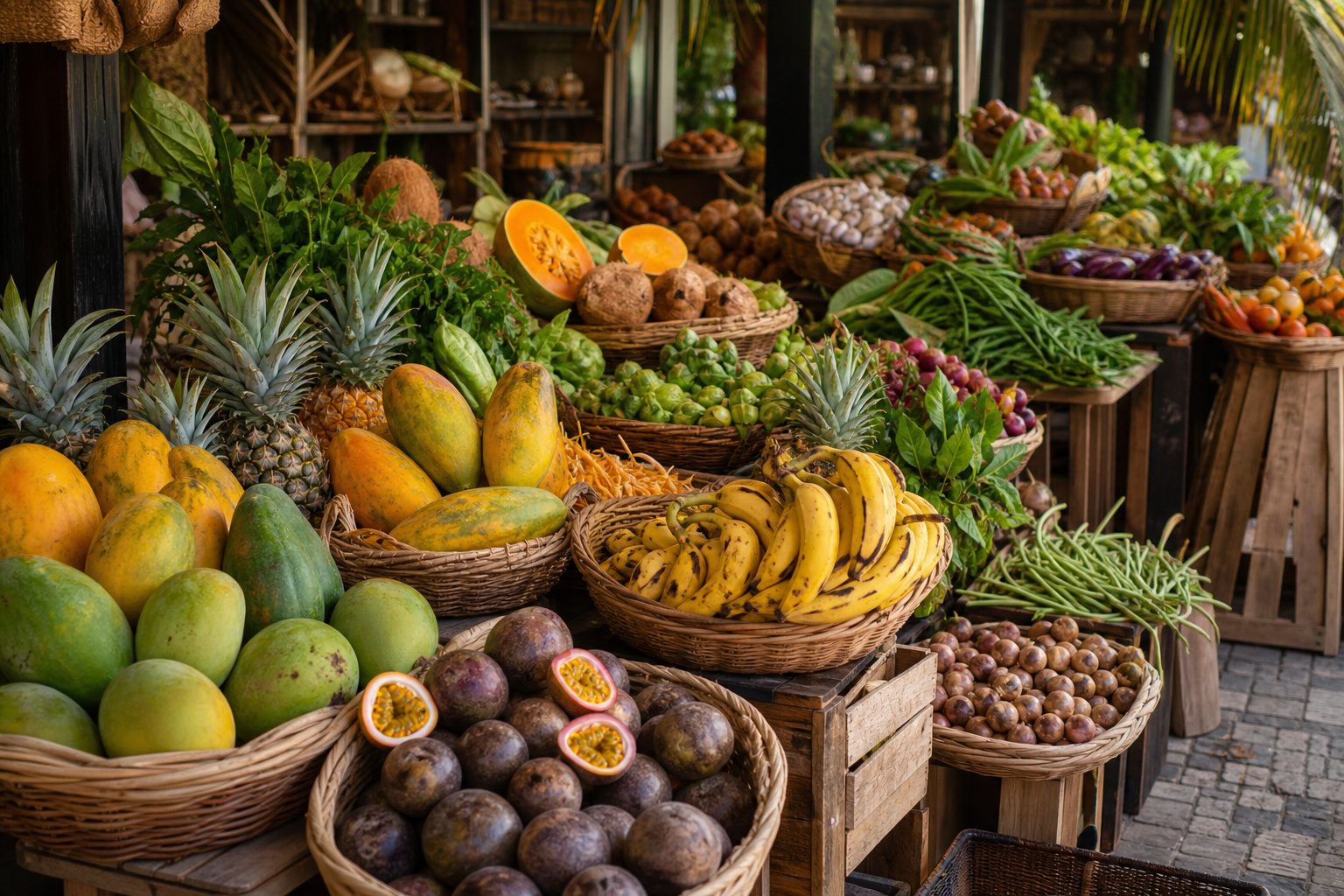
This is probably where Mauritius offers the best surprises, provided you eat the way people eat here. Markets are the key. Every major town has one, and you will find seasonal fruit and vegetables, herbs, spices and fish at prices that feel very welcome when you come from Europe. Victoria pineapples, mangoes, lychees in season, bananas, garden vegetables: shopping at the market, late morning or late afternoon for the best deals, can radically change your grocery budget.
For basic products, rice, lentils, vegetables, fish, chicken, expect a moderate budget if you cook. This is one of the major advantages of accommodation with a kitchen, whether an apartment at Domaine de Grand Baie or another equipped rental: preparing your own meals is much easier on the wallet than eating out for both lunch and dinner. Conversely, anything imported pushes the supermarket bill up: European cheeses, charcuterie, branded chocolate, wines, breakfast cereals. If these products are essential to you, treat them as a separate item in your budget, because this is often where spending gets out of hand.
When it comes to restaurants, the range is wide:
- Street food and small local restaurants are the island’s best value. A dholl puri, roti, mine frit, briani or fish dish in a simple local eatery costs very little and is genuinely filling. It is also the most authentic cuisine.
- Mid-range restaurants, beach restaurants, well-prepared Creole or Indian tables, remain reasonable, especially compared with equivalent European prices.
- High-end tourist and hotel restaurants in the north and west are aligned with international standards, with bills that can match those of a major European city.
Two habits make a real difference over time. First, alternate: cook during the week and treat yourself to restaurants at the weekend to smooth out spending. Second, drink local. Water, fresh fruit juices, tea and locally produced alcohol cost far less than imported wines and spirits, which are often heavily taxed. By eating Mauritian and in season, you can enjoy excellent food without putting pressure on your budget; it is when you try to recreate your European shopping trolley that costs rise.
Book your stay at the best rate
Getting around and leisure
Transport is an area where your initial choice determines the rest of the budget. The bus is by far the most economical option on the island. The network serves most towns and tourist areas, fares are extremely low, and it is a very concrete way to see the country in daily life. In return, you need to accept a relaxed pace, connections and schedules that become less frequent in the evening.
A rental car offers a completely different kind of freedom, valuable if you want to explore the wild south, inland plantations or several beaches. Remember that people drive on the left: a few hours are usually enough to adapt, but it is worth anticipating. Fuel is a real cost, and renting by the week or month is much cheaper per unit of time than renting for just a few days. For a long stay, monthly rental or even considering a used vehicle may be worth discussing depending on the duration. Between the two, taxis, to be negotiated and agreed in advance, and transport apps where they operate, are very useful for occasional trips, an evening out or an airport transfer.
For leisure, the best news for a Mauritius budget is that the essentials are free or almost free. Public beaches are freely accessible, and swimming, walking, watching the lagoon and sunsets cost nothing. Inland hikes, gardens and some natural sites are accessible for little or no cost. This is the foundation of a low-budget stay.
The items that really add up are organised activities and excursions:
- Boat trips : catamaran outings, diving, guided snorkelling, dolphin trips or fishing. These are wonderful experiences, but they need to be booked and budgeted for separately.
- Parks and attractions : nature parks, botanical gardens, paid sites and adventure activities all have an entrance fee.
- Golf, spa and wellness, often linked to hotels, belong in the treat-yourself budget.
- Evenings out : lively bars and restaurants in the north, especially around Grand Baie and Pointe aux Canonniers, where the island’s nightlife is at its most varied.
The right balance is to make the most of what is free, beaches, walking, swimming, markets, and choose a few paid activities that really matter, rather than trying to tick everything off. Staying in the north, near Grand Baie, also has a discreet budget advantage: many beaches, shops and outings are accessible on foot or via short journeys, which naturally reduces transport costs.
What budget for a month in Mauritius?
It is impossible to give one single honest figure, because two people can live for a month in Mauritius on budgets that vary from one to three times as much. It is better to think in profiles, adding up your own spending categories.
The economical, immersive profile. Simple monthly rental or furnished apartment outside the most expensive areas, home cooking from markets, bus travel, mostly free leisure activities with one or two excursions during the month. This is the lowest budget, and it remains very reasonable. This lifestyle suits those staying for a long time, working remotely or testing a move, and who are happy to live in a Mauritian way.
The balanced comfort profile. Pleasant, well-located accommodation, for example an apartment at Domaine de Grand Baie or a stay in a boutique hotel in Pointe aux Canonniers for part of the time, a mix of home cooking and restaurants, a rental car, several excursions and outings during the month. This is the intermediate budget, the most common for long holidays or an in-depth discovery of the island. You can enjoy yourself without counting every rupee, while still keeping control of the major expenses.
The premium holiday profile. High-end accommodation, regular restaurants, car, frequent activities and excursions, spa and evenings out. The budget then aligns with that of a comparable stay in Europe, with the beauty of the setting as a bonus. This is the dream holiday mode, fully embraced.
A few general tips to set your monthly budget without unpleasant surprises:
- Clearly separate accommodation, food, transport and leisure. These are the four pillars, and each can be managed independently.
- Allow a reserve for unexpected costs : health, repairs, a spontaneous excursion, a return trip. A safety margin avoids stress.
- Accommodation is the most powerful lever. Moving from tourist nights to monthly rent, and from a hotel to an apartment with a kitchen, changes everything on a long stay.
- Food comes just after. Eating local and seasonal food, cooking for yourself, drinking local: the bill drops without effort and without deprivation.
- Adapt according to the season. Outside peak periods, both accommodation and activities are easier to negotiate.
The right method is not to look for the average price of a month in Mauritius, but to build your own budget, category by category, based on the profile that feels most like you. That is what will give you a realistic, reassuring view of what life on the island really costs.
Frequently asked questions
Is life expensive in Mauritius?
It all depends on your lifestyle. If you eat local and seasonal food, shop at markets and travel by bus, life is very affordable. If you mainly buy imported products and frequent tourist addresses in the north and west, the budget can quickly match that of a stay in Europe. The country offers both; the choice is yours.
Do you need a visa to stay several months in Mauritius?
UK, EU and most Western visitors can enter Mauritius without a visa for tourism, for up to six months, or 180 days, per calendar year, with the exact duration granted on arrival. This leaves plenty of time to test life on the island before considering a more formal move. To stay beyond that, or to work, you should check the relevant statuses and permits with the Mauritian authorities.
Is a hotel or an apartment better for a long stay?
For a long stay, a furnished apartment, such as those at Domaine de Grand Baie, is almost always more economical: monthly rent rather than nightly rates, and above all a kitchen that significantly reduces the restaurant budget. The boutique hotel in Pointe aux Canonniers remains ideal for a shorter stay or for settling in on arrival without managing logistics.
How can you reduce your food budget on the island?
Buy fruit, vegetables and fish at the market, cook at home, choose local and seasonal products, and keep restaurants as a pleasure rather than a daily habit. Avoid recreating a European shopping trolley: cheeses, wines and imported products are the main reason supermarket bills become high.
Is it better to rent a car or take the bus?
The bus is the most economical option and serves the island well, though at a slower pace. A car offers real freedom to explore the south and inland areas; remember that people drive on the left and that fuel is a genuine cost. For a stay of a month or more, long-term rental is much cheaper per day than renting for just a few days.
What budget should you plan for a month in Mauritius?
There is no single figure: the budget can vary from one to three times as much depending on your profile. By living the Mauritian way, modest accommodation, home cooking, buses and free leisure activities, it remains very reasonable. In balanced comfort mode, with a nice apartment, a car and excursions, the budget rises a level. In premium mode, it matches that of a comparable stay in Europe. The best approach is to build it category by category.