
In Mauritius, gardens are not limited to the famous Pamplemousses Garden. Once you leave the main tourist routes, you discover more discreet places, sometimes modest, often very soothing: shaded avenues in Curepipe, ancient trees in the heart of Port Louis, endemic plant trails in natural parks, arboretums and nurseries where you gain a better understanding of Mauritian flora.
For those who enjoy walking slowly, listening to birds, recognizing a leaf, smelling the dampness of woodland after the rain, these botanical gardens in Mauritius offer another way to travel. Less spectacular than a lagoon at first glance, but deeply endearing.
| Key points | Why go there |
|---|---|
| Curepipe Botanical Garden | A cool, shaded walk on the central plateau, with a peaceful atmosphere and remarkable trees. |
| Pamplemousses Garden | The great Mauritian classic, known for its ponds, palm trees and history. |
| Company Garden in Port Louis | A green break in the heart of the capital, convenient during a day of sightseeing. |
| Parks and endemic plant areas | To understand Mauritius’ native flora, particularly ebony trees, bois de natte and other Mascarene species. |
| Visiting tip | Bring water, sun protection and comfortable shoes, and check access conditions with official sources. |
Curepipe Botanical Garden, the green address not to miss

The Curepipe Botanical Garden deserves a special place. Located on the heights of the island’s central region, in an area that is cooler and more humid than the northern or western coast, it offers a very different atmosphere from sun-drenched tropical gardens. Here, the walk takes place beneath the trees, in soft light, with that sense of calm typical of the Mauritian highlands.
Created during the colonial period, this garden is one of Curepipe’s historic green spaces. It does not have the tourist scale of Pamplemousses, and that is precisely what gives it its charm. People come here to walk unhurriedly, observe the trunks, foliage, ferns and shaded perspectives, and rediscover a more inland Mauritius, far from the island’s purely seaside image.
Visitors often notice a fine diversity of trees and species that have been introduced or acclimatized, as well as species linked to Mauritius’ botanical history. Depending on the areas and the maintenance at the time, you may come across imposing trees, discreet flowerbeds, quiet paths and corners ideal for photography. Some species mentioned by regular visitors include camphor trees, mahogany and ornamental conifers, but the garden’s exact composition may change over time.
Curepipe Botanical Garden is particularly suited to those looking for a visit that is easy to include in a day on the central plateau: Curepipe, Trou aux Cerfs, the roads towards the south or the Black River Gorges. After a morning on the road or exploring, it is a simple, cool break, without any staging.
- Atmosphere: cool, shaded, peaceful.
- Best for: a short to medium-length walk, a nature break, a few photos, a quiet moment.
- Good to know: access conditions, the state of the paths and opening hours may change; it is best to check before going.
- For whom: curious travellers, families, botany lovers, couples looking for a peaceful detour.
Why Curepipe is different from Pamplemousses Garden
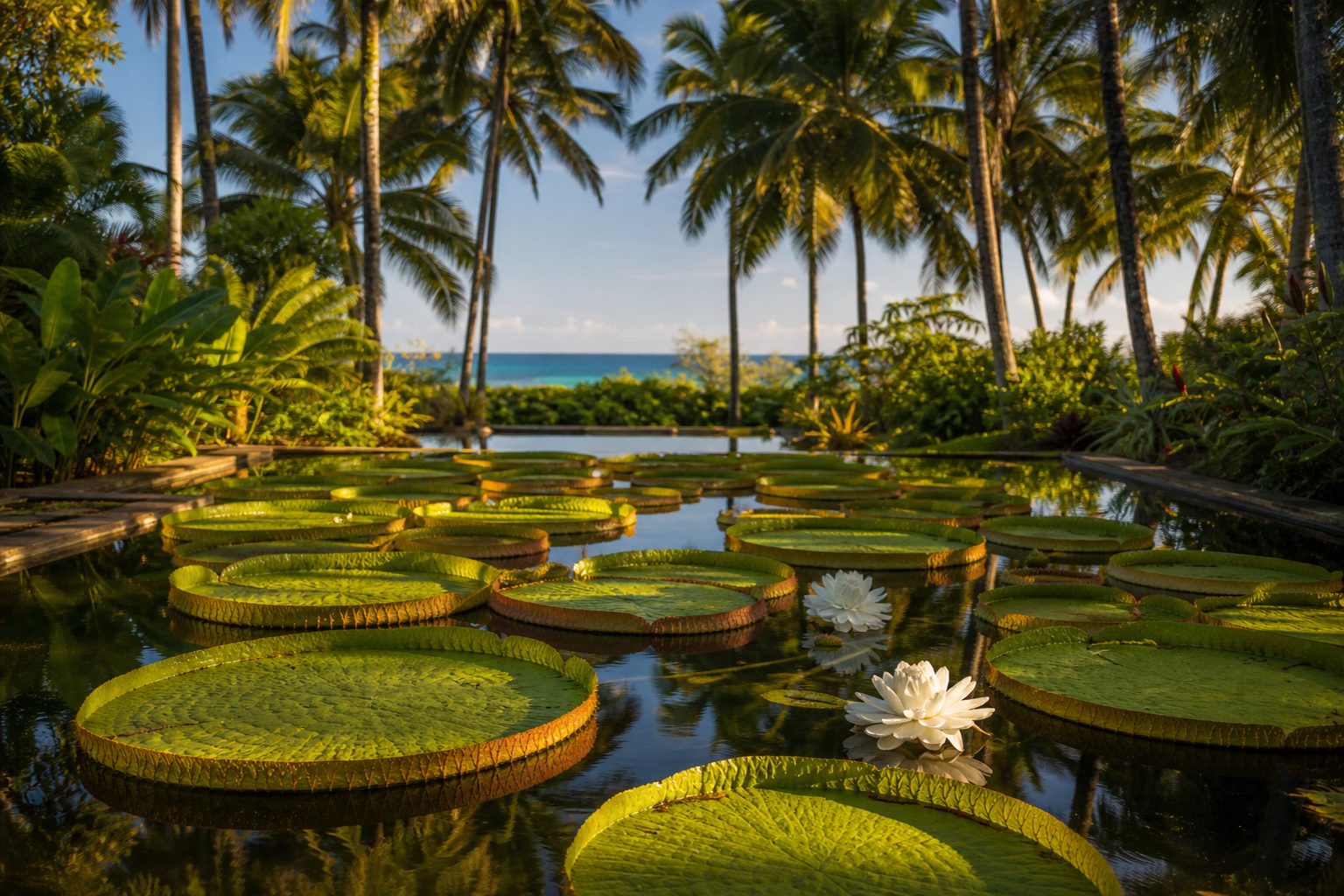
The best-known botanical gardens in Mauritius remain those of Pamplemousses, often called the Sir Seewoosagur Ramgoolam Botanical Garden. It is an iconic stop: large ponds, giant water lilies, palm trees, tropical trees, long avenues and a very present historical heritage. It naturally attracts more visitors.
Curepipe offers a more intimate experience. You come here less to tick off a plant landmark than to feel a climate, an atmosphere, a rhythm. Pamplemousses is larger, more famous, more tropical in the imagination. Curepipe is more discreet, cooler, sometimes quieter. The two visits do not replace each other: they complement each other.
| Place | Experience | Choose it if you enjoy |
|---|---|---|
| Curepipe Botanical Garden | A cool walk on the central plateau, with a local and restful atmosphere. | Quiet places, ancient trees, detours away from the main tourist flows. |
| Pamplemousses Garden | A large historic garden, famous ponds, much-photographed plant collections. | Must-see visits, structured tropical gardens, heritage sites. |
| Company Garden | A shaded break in the middle of the city, in the heart of Port Louis. | Easy stops between two urban visits. |
| Endemic plant parks and arboretums | A more naturalistic discovery of Mauritian flora and restored species. | Native plants, trails, conservation, less landscaped scenery. |
Pamplemousses Botanical Garden, the great classic to see at least once
Pamplemousses remains a benchmark. Its history, collections and avenues make it a memorable visit for many travellers. The giant water lilies often catch the eye, but the garden also offers beautiful rows of palm trees, remarkable trees and the atmosphere of a grand tropical estate.
To make the most of it, it is best to avoid the hottest hours whenever possible, walk slowly and not limit yourself to the best-known spots. Historic gardens are also discovered in the details: a piece of bark, a botanical sign, dense shade, a calm pond, a perspective between two rows of palm trees.
The Company Garden in Port Louis, a breath of fresh air in the city
In the heart of Port Louis, the Company Garden offers a welcome stop during a day in the capital. It is not a botanical garden in the sense of a large scientific collection, but it is a historic and lively green space, surrounded by urban activity.
You can pause there between the market, shopping streets, old buildings and the waterfront. The large trees provide welcome shade, especially when the heat rises in the city. This garden tells another side of Mauritius: one of passing through, encounters, and pauses taken in the midst of movement.
The Black River Gorges and endemic plant areas
To get closer to Mauritian flora in a wilder setting, look towards the Black River Gorges and protected natural areas. Black River Gorges National Park is one of the island’s major natural sites. Here you discover forest landscapes, ravines, viewpoints and trails, with a significant presence of native and endemic species.
Mauritius’ endemic flora is precious because it belongs to a unique island group, the Mascarenes. Depending on the sites and conservation programmes, you may encounter ebony trees, bois de natte, vacoas, latan palms, ferns, as well as plants whose local names already tell a story. Some species are rare or protected: you must therefore stay on the trails, pick nothing and follow the posted instructions.
These spaces differ clearly from classic botanical gardens. Here, the interest is not only decorative. You understand how Mauritian vegetation has adapted to the relief, winds and humidity, and how restoration efforts are trying to preserve this natural heritage.
- For an easy visit: choose a trail suited to your physical condition and the day’s weather.
- To observe better: walk slowly, look at the undergrowth, young plants and interpretation panels where they exist.
- To respect the sites: do not leave the marked paths, do not feed the animals, do not collect seeds or leaves.
Arboretums, nurseries and endemic gardens: the gems to look for
Beyond the big names, Mauritius is home to several spaces dedicated to trees, native plants or ecological restoration. Some take the form of arboretums, others of nurseries, reserves, educational gardens or interpreted trails. Access may vary depending on the period, authorizations or visiting conditions.
These places are particularly interesting if you want to put a name to what you see during your hikes: ebony, bois de pomme, bois de natte, latan palm, vacoa, tree ferns, undergrowth plants. They help you better grasp the difference between introduced tropical vegetation, often highly ornamental, and endemic Mauritian flora, rarer, sometimes less spectacular at first glance, but essential to the island’s natural identity.
For travellers sensitive to ecology, these visits add new depth to the stay. They remind us that Mauritius is not only a beach postcard: it is also an island of relief, forests, volcanic soils, microclimates and patient plant reconquests.
What flora can you observe in the botanical gardens of Mauritius?
Mauritian gardens often blend several plant worlds. You find species endemic to Mauritius or the Mascarenes, indigenous plants from the region, but also many species introduced over the course of history: ornamental trees, fruit trees, spices, palm trees, bamboo, medicinal or decorative plants.
Ebony is one of the most emblematic trees when talking about the restoration of native forests. Bois de natte, latan palms, certain ferns and several endemic shrubs also bear witness to the island’s botanical richness. The term Mascarene refers to this plant world of the Mascarenes, where each island has its own particularities.
In more ornamental gardens, you will also come across palm trees, flamboyant trees depending on the season, flowering trees, aquatic plants, bamboo, camphor trees, mahogany and other acclimatized species. The point is not to recognize everything, but to take the time to look: the shape of the leaves, fragrance, the texture of the trunks, the colour of young shoots, the sound of the wind in the branches.
Practical tips for a successful visit
Mauritius enjoys a tropical climate. The gardens can be visited all year round, but the experience changes depending on the season, altitude and the day’s weather. The central plateau, particularly around Curepipe, is generally cooler and more humid than the coastal regions of the north and west. A shower can arrive quickly; it is also part of the charm of Mauritian gardens.
- Choose the right time: mornings are often pleasant for the light, coolness and calm. During the week, some sites may be more peaceful.
- Bring the essentials: water, a hat or cap, sun protection, repellent if necessary, comfortable shoes.
- Check before you go: opening hours, access, any works, weather conditions and the specific rules of each site should be checked with official sources or directly with the venue.
- Respect the gardens: do not pick flowers, do not climb trees, do not leave litter, and remain mindful of fragile areas.
- Plan an itinerary: combine Curepipe with a discovery of the highlands, Pamplemousses with a day in the north, and Port Louis with an urban visit.
If you are planning a short stay, you can include these stops in a well-balanced programme. A garden in the morning, a local table at lunchtime, a beach or viewpoint in the afternoon: this is often the right pace to avoid turning discovery into a race. To help you structure your days, you can also consult our ideas for visiting during the week and spreading out your stops without rushing.
Gardens for a proposal, honeymoon or celebration
The botanical gardens and green corners of Mauritius naturally inspire moments for two: a marriage proposal, photo shoot, intimate anniversary, honeymoon stroll. Their strength lies in their simplicity. A shaded path, a discreet bench, soft light after the rain, a few flowers, and the setting is already there.
For a formal event, however, it is important to distinguish a romantic walk from private hire or a ceremony. Public gardens and protected areas have their own rules: permits, opening hours, respect for the site, possible limits regarding music, decoration or the presence of a service provider. Before imagining a celebration in a garden, it is best to check what is actually possible.
If you wish to organise a wedding, a proposal or a honeymoon in Mauritius, the most comfortable option is to combine a natural setting for the photos with a welcoming venue where you can host your loved ones, dine, get ready or extend the evening.
Stay at Mandala Moris to explore the gardens
From Grand Baie, Mandala Moris allows you to enjoy the north of the island while organising excursions to the great gardens, markets, beaches and inland roads. The address is ideal for peaceful stays, reunions, honeymoons and small celebrations planned with care.
After a visit to Pamplemousses, a stop in Port Louis or a cooler day around Curepipe, returning to an intimate place makes all the difference: you shower, rest, share a drink, talk about the day. For an event, our role is also to help you ask the right questions: what pace, what atmosphere, what meal, what level of privacy, what constraints linked to the chosen venues.
Mandala Moris can support your wishes with a simple, practical approach: charming accommodation, moments around the table, local advice, coordination according to the nature of your project. A successful celebration in Mauritius does not depend on having a spectacular setting at all costs, but on a smooth sequence, weather anticipated with flexibility, and well-prepared details.
Frequently asked questions about the botanical gardens of Mauritius
Is the Curepipe botanical garden worth visiting?
Yes, especially if you enjoy quiet places, old trees and the cooler atmosphere of the highlands. It is not the island’s most spectacular visit, but it is a lovely green, authentic break that is easy to include in an itinerary through the centre.
Should you choose Curepipe or Pamplemousses?
The two experiences are different. Pamplemousses is better known, larger and more heritage-focused. Curepipe is more discreet, cooler and more local. If your schedule allows, visiting both gives you a more complete view of Mauritian gardens.
Can you organise an event in a botanical garden in Mauritius?
It depends on the venue, its status and the available permits. For a photo shoot or a romantic walk, it is often simpler. For a ceremony, decoration or a group, you need to check the rules with the site managers and plan a backup option.
Conclusion
The botanical gardens of Mauritius tell the story of a more secret island: one of highlands, endemic trees, shaded paths and pauses far from the noise. Start with the Curepipe botanical garden if you are looking for a peaceful visit, add Pamplemousses for the heritage, then leave room for natural parks. And if you are preparing a stay or a celebration, Mandala Moris can help you build a gentle, realistic and memorable programme.
Frequently asked questions
Where is the Curepipe botanical garden located?
The Curepipe botanical garden is located in Curepipe, on the highlands in the centre of Mauritius. The region is generally cooler and more humid than the coast, giving the garden a shaded and peaceful atmosphere.
What is the difference between the Curepipe botanical garden and the one in Pamplemousses?
Pamplemousses is the large historic and tourist garden, known for its ponds, palm trees and tropical collections. Curepipe is more discreet, more local and cooler, ideal for a quiet walk among the trees.
When should you visit the botanical gardens of Mauritius?
They can be visited all year round, taking the tropical climate into account. Mornings are often pleasant for enjoying soft light and more comfortable temperatures. Before you go, it is best to check opening hours, access conditions and the weather with official sources.