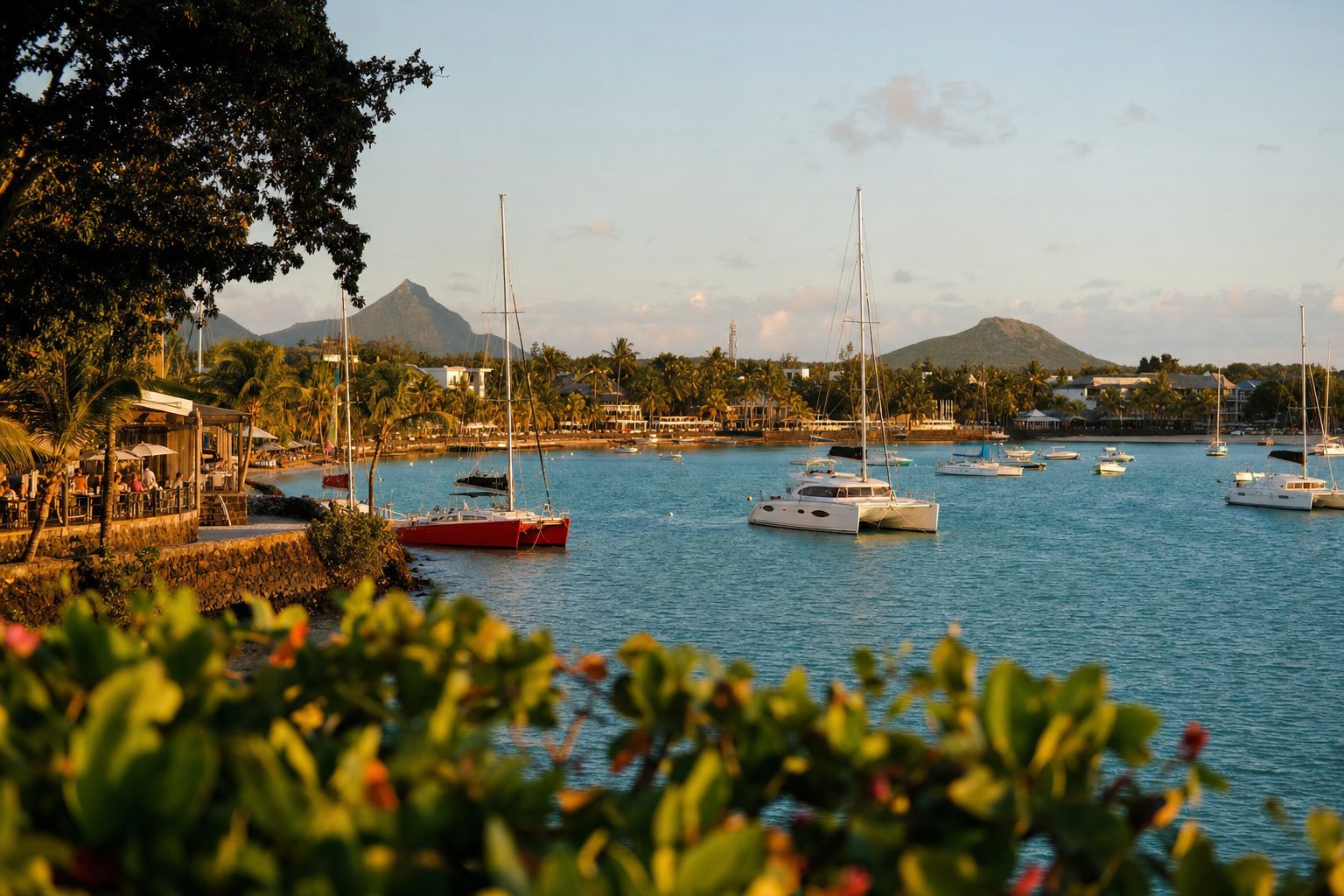
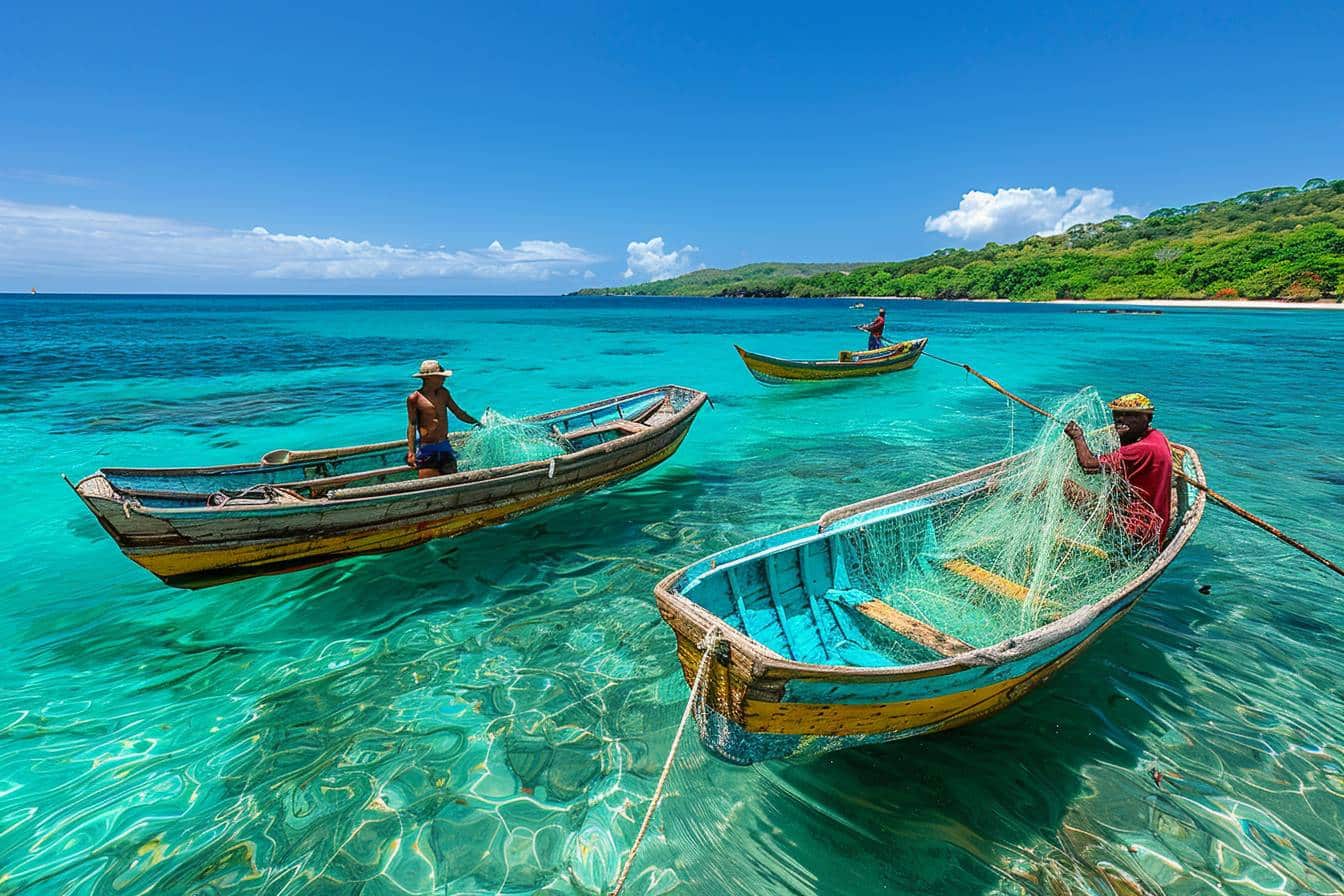
Picture yourself on the crystal-clear waters of the Indian Ocean, taking part in an activity that has shaped the culture and economy of Mauritius for centuries. Yes, we’re talking about traditional fishing, an economic mainstay that accounts for around 2% of the GDP of this paradise island. Through this article, you will discover the unique techniques and time-honoured customs that make fishing in Mauritius much more than just an activity: it is a true way of life.
| Key points to remember |
|---|
| Fishing is an important part of Mauritian culture. |
| The techniques used are unique and reflect the island’s traditions. |
History of fishing in Mauritius
In Mauritius, traditional fishing is more than just an economic activity. It is a tradition, a legacy passed down through generations. For the island’s inhabitants, fishing is an essential part of their culture and identity. But how did this practice develop? How has it evolved over time?
Several centuries ago, the first inhabitants of Mauritius began fishing to meet their needs. They used simple techniques, such as nets and lines, and mainly fished near the shore. Over time, these techniques became more refined and diversified.
With the arrival of European settlers in the 17th century, fishing in Mauritius experienced a new boom. The French and the British introduced new methods and technologies, transforming fishing into a thriving industry.
Today, despite the growing influence of modern technology, traditional fishing remains very much alive in Mauritius. Local fishermen continue to use age-old techniques, thereby preserving a precious cultural heritage.
Key figures in the history of Mauritian fishing
- The first inhabitants: They were the ones who laid the foundations of traditional fishing in Mauritius. They developed effective techniques for catching fish with limited resources.
- European settlers: They brought new methods and technologies that helped Mauritian fishing evolve.
- The fishermen of today: They are the guardians of this tradition ancestral. Despite the challenges posed by modernisation and climate change, they continue to practise their trade with passion and dedication.
The evolution of Mauritian fishing
Over the centuries, Mauritian fishing has adapted to environmental and technological changes. Although some traditional methods are still used today, others have been modified or replaced by more modern techniques.
For example, the use of nets has been complemented by the introduction of trolling lines and longlines. In addition, Mauritian fishermen began using motorboats to reach more distant fishing grounds.
Despite these changes, fishing in Mauritius remains deeply rooted in its traditions. Local fishermen continue to respect the customs and rituals associated with their trade, thereby preserving an important part of their cultural heritage.
Traditional fishing techniques
Traditional fishing in Mauritius is an art ancestral, passed down from generation to generation. Each fishing technique is unique, adapted to local conditions and reflects the ingenuity of Mauritian fishermen.
Seine fishing
Seine fishing is a popular technique among local fishermen. It consists of casting a curtain-shaped net into the water, then slowly pulling it towards the shore. The trapped fish are then collected by hand.
Trolling
Trolling is another commonly used method. It involves using a fishing line attached to the back of a moving boat. The hooks are baited with lures or live bait to attract fish.
Line fishing
Line fishing is a simpler technique, but just as effective. It consists of casting a fishing line with a hook into the water, then waiting for a fish to bite.
Trap fishing
Trap fishing is a technique that involves using cage-shaped traps, generally made from natural materials such as bamboo. The traps are baited and then submerged in the water. Fish can easily enter the trap, but struggle to get out.
Harpoon fishing
Finally, harpoon fishing is an older fishing technique, but one that is still practised. It involves using a long pointed stick, or harpoon, to spear fish.
| Technique | Description |
|---|---|
| Seine fishing | Use of a curtain-shaped net, slowly pulled towards the shore |
| Trolling | Fishing line attached to the back of a moving boat |
| Line fishing | Casting a fishing line with a hook into the water |
| Trap fishing | Use of cage-shaped traps, submerged in the water |
| Harpoon fishing | Use of a long pointed stick to spear fish |
Each technique has its own subtleties and requires in-depth knowledge of fish habits, weather conditions and sea currents. Traditional fishing in Mauritius is a delicate dance between humankind and nature, a harmony that has been cultivated for centuries.
Customs and traditions associated with fishing in Mauritius
Fishing in Mauritius, much more than just an economic activity, is deeply rooted in the island’s cultural heritage. The customs and rituals surrounding it reflect the richness of Mauritius’s past and the inhabitants’ respect for their marine environment.
Rituals before fishing
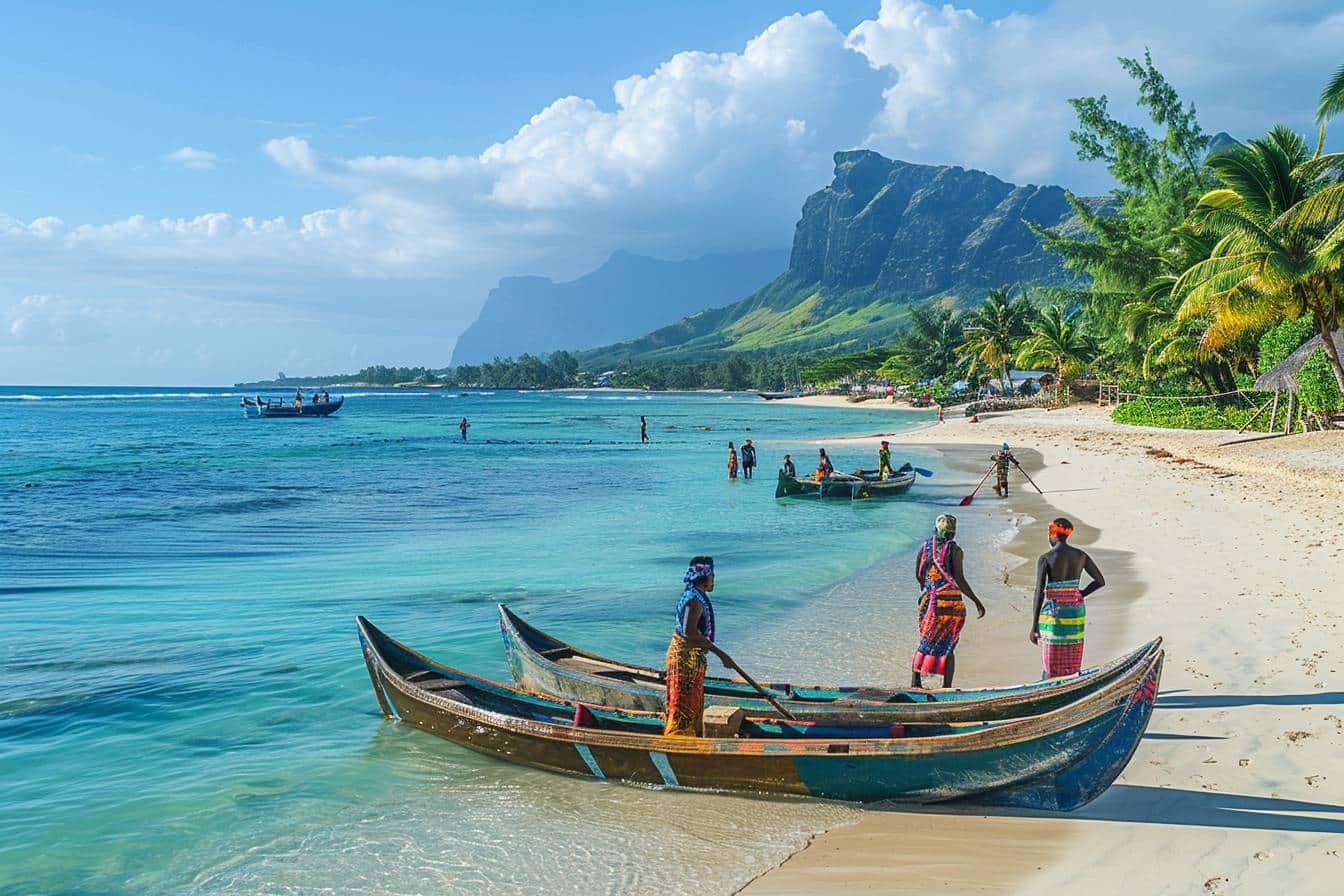
The adventure often begins even before the first rays of sunlight break the horizon. Fishermen gather on the beach, preparing their nets and bait while sharing a convivial moment. Some offer a silent prayer to the sea, hoping for a fruitful catch.
Respect for nature
As guardians of the oceans, Mauritian fishermen have always had a deep respect for the sea and its inhabitants. They have therefore developed sustainable fishing techniques, making it possible to preserve marine species while ensuring their livelihood.
The celebration after fishing
Once the fishing is over, a true spectacle unfolds before the eyes of passers-by. The fish are sorted by size and species, then sold directly on the beach or at the local market. But that’s not all: these moments are also an opportunity to share stories, laugh and celebrate the fruits of their labour together.
Passing on knowledge
Traditional fishing is a skill passed down from generation to generation. The younger generations learn from their elders not only fishing techniques, but also respect for the traditions and customs associated with them.
- Rituals before fishing: shared preparation of nets and bait, silent prayers.
- Respect for nature: sustainable fishing techniques, preservation of marine species.
- The celebration after fishing: sorting and selling the fish, sharing stories and celebrations.
- Passing on knowledge: intergenerational learning of techniques and traditions.
In short, every aspect of traditional fishing in Mauritius is imbued with a rich history and deep respect for nature. It is not simply an activity; it is a true art of living that continues to be celebrated and preserved on the island.
A unique experience at Mandala Moris
Picture yourself on a tropical island, the sound of waves in the background, a starry sky above you. Mandala Moris, nestled in the heart of Mauritius, offers you this reality. This guesthouse stands out for its table d’hôte service, where local flavours take pride of place. Their catering service will introduce you to the delights of Mauritian cuisine, prepared with love and expertise. Looking for more independence? Opt for their “Self Catering” offer. Mandala Moris can also turn your private event into an unforgettable celebration, hosting up to 40 people.