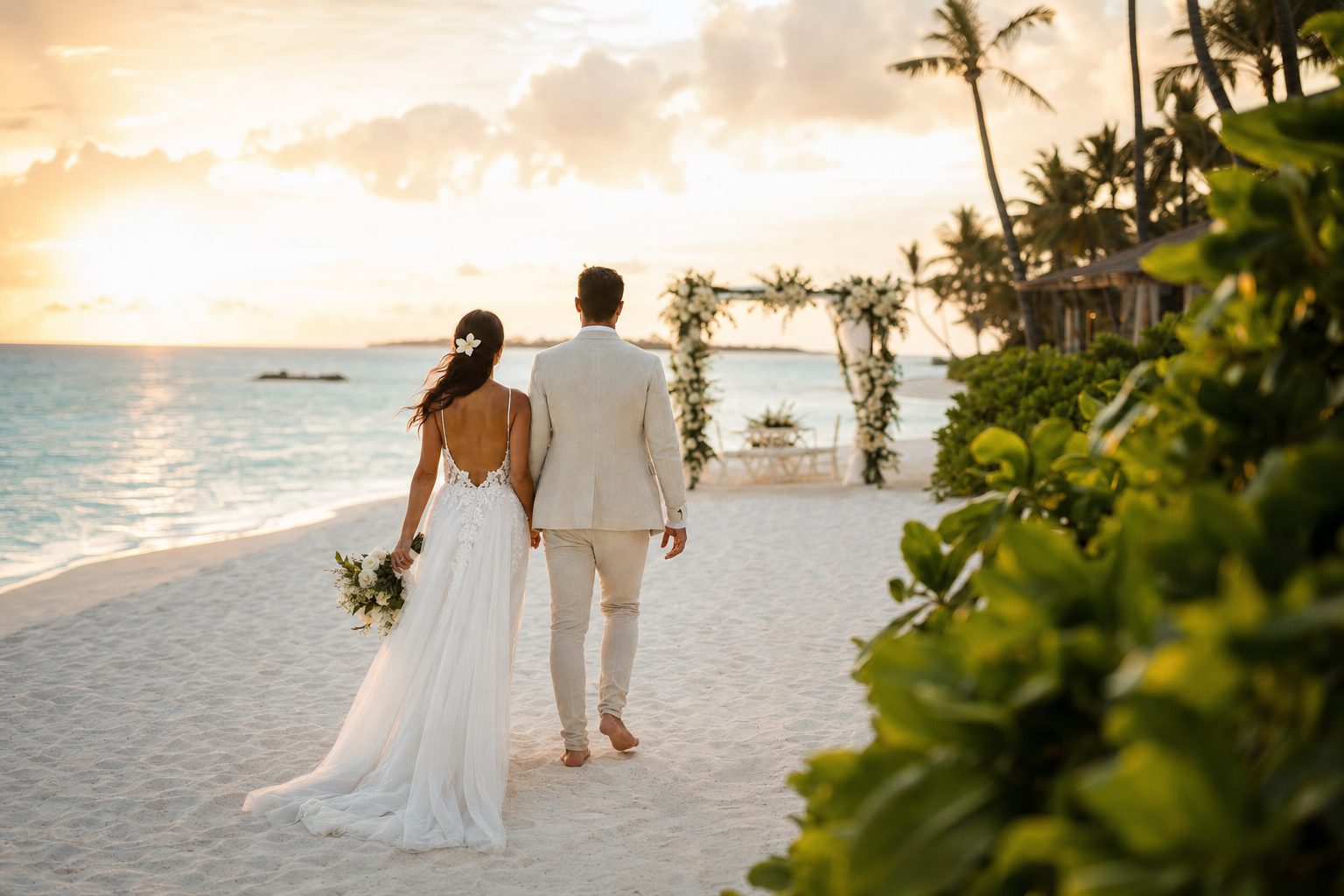
Dreaming of an intimate wedding under another sky? This guide compares destinations, clarifies the legal options and helps you calmly prepare a celebration abroad, from the first idea to the big day.
Getting married abroad makes people dream for good reasons. You picture a softer light, a dinner with your feet in the sand, a ceremony surrounded by the people who truly matter, then a few days to breathe instead of returning straight to daily life. The idea is not simply to go far away: it is to create a more personal moment, in a place that gives meaning to your story.
But a wedding abroad needs to be prepared methodically. You have to choose the right destination, understand what will be legally recognised, organise exchanges from a distance and know who to trust on site. This guide helps you compare the main options, avoid administrative confusion and build a realistic, elegant and smooth project.
Why weddings abroad appeal to more and more couples
The first attraction is often intimacy. Many couples no longer want a big wedding out of obligation, with a guest list that grows week after week. Going away allows you to refocus the event: close parents, a few dear friends, sometimes only the witnesses. The atmosphere changes immediately. Conversations are more genuine, the days less fragmented, the memories more widely shared.
The setting also plays a major role. A beach at sunset, a Mediterranean terrace, a tropical garden, a villa facing the sea or a white chapel in an old village: the place becomes part of the story. It does not need to be spectacular at all costs. It should be consistent with your relationship, comfortable for your guests and suited to the ceremony you have in mind.
Another argument comes up often: the budget can be easier to control than a large traditional wedding at home. It is not automatic, because travelling, staying and organising on site represent a real cost. But by naturally reducing the number of guests and favouring a more compact experience, some couples spend less, or spend differently: less quantity, more quality, more time together.
Finally, getting married abroad lets you prolong the moment. The wedding is not limited to a single day. Guests sometimes arrive the day before, share a simple dinner, explore the surroundings, then leave with the feeling of having lived a true interlude. For the newlyweds, it is also possible to flow straight into the honeymoon without a break, especially when the destination offers both a beautiful ceremony setting and real possibilities for a longer stay.
The main wedding destinations compared honestly
There is no perfect destination for every couple. The right choice depends on your style, the season, the level of formalities you can accept, the flight time, the language, the age of your guests and the atmosphere you want. Here is an overview of the options most often considered.
Greece and Italy: Mediterranean charm, elegance and the art of living
Greece and Italy seduce with their obvious beauty: white villages, luminous islands, old palaces, olive groves, terraces over the sea, generous tables. For guests coming from Europe, access is generally simpler than a far-flung destination, with shorter flights and limited cultural adjustment.
These countries suit couples looking for a refined atmosphere, a small wedding or a reception in a house full of character very well. The local gastronomy, the richness of the landscapes and the ease of combining a ceremony with a few days of travel are real assets.
The limits mainly concern the season and demand. The most sought-after venues can be booked far in advance, some regions become very busy in summer, and temperatures can be high in the south. Logistics can also become more complex on islands or in isolated villages: transfers, separate accommodation, noise restrictions, timings, local permissions.
Bali: spirituality, nature and highly staged ceremonies
Bali attracts couples who want a sensory, exotic atmosphere: rice terraces, temples, villas opening onto the jungle, beaches, offerings, music, flowers. The island is used to symbolic ceremonies and carefully staged settings. Local providers generally know how to compose highly crafted decors and support international couples.
It is a beautiful option for those who want an unconventional, highly visual ceremony with a strong travel dimension. Private villas allow you to create an intimate bubble, and the island offers many ideas for extending the stay.
The limits are real: the journey is long from Europe, the climate varies with the seasons, some areas are very busy, and traffic can make journeys longer than expected. On the legal side, procedures can be more complex depending on nationality, religion and the chosen form of marriage. Many couples therefore opt for a civil wedding in their home country, followed by a symbolic ceremony in Bali.
Maldives: absolute intimacy and a postcard setting
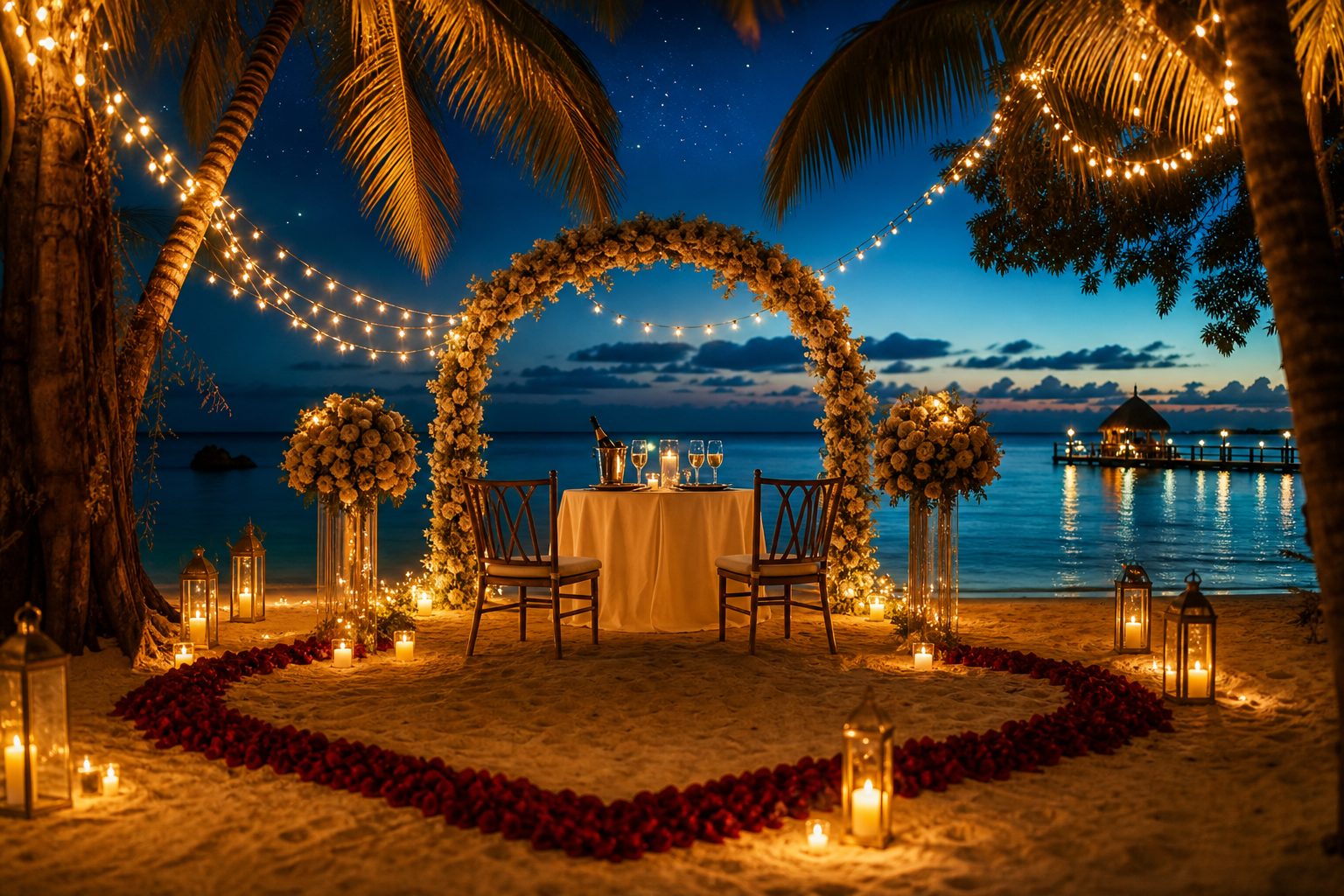
The Maldives immediately evoke lagoons, white beaches, overwater villas and the feeling of being far from the world. For a marriage proposal, a vow renewal or a symbolic ceremony for two, the setting is very powerful. Everything lends itself to intimacy: arrival by boat or seaplane, a private dinner, a reserved beach, a stay centred on the couple.
This destination particularly suits couples who do not want to organise a reception with many guests. It is ideal for a very private, almost secret celebration, where the journey itself becomes the event.
The main limit concerns precisely the structure of the island resorts. For a group, costs can quickly become constraining, and the choice of outside providers is sometimes restricted by the way the resort operates. A legally recognised civil wedding may also not be the simplest option for foreign couples. Here again, a symbolic ceremony after a civil wedding at home is often the smoothest route.
Mauritius: gentleness, accessibility and natural balance
Mauritius occupies a place of its own. It offers the change of scenery of an Indian Ocean island, while remaining very welcoming for international couples. English is used in many administrative and professional settings, alongside French, which is widely spoken, and Mauritian Creole. This linguistic familiarity is very reassuring when you need to communicate with a venue, a photographer, a celebrant, a florist or a hotel team.
The setting is varied without being complicated to grasp: the northern and western beaches often appreciated for their sunshine, lagoons, tropical gardens, charming houses, mountains inland, coastal villages. The tropical climate makes a celebration possible over a fairly long part of the year, with a hotter, more humid season during the austral summer and a generally milder, drier period during the austral winter. As everywhere in the tropics, you need to plan fallback options and pay attention to the chosen season.
For couples who wish to get married in Mauritius, one of the great advantages is the balance between beauty, comfort, language and organisation. The formalities are considered accessible when the file is prepared rigorously, and local providers are used to supporting couples coming from abroad. It is a destination that lends itself equally well to a civil wedding, a symbolic ceremony, a marriage proposal, a honeymoon or an intimate family celebration.
The main limit is that of any distant island: you need to anticipate flights, passports, accommodation and your guests’ comfort. Good coordination on site makes all the difference. For a couple who wants a warm, legible and elegant experience, Mauritius remains a particularly coherent option.
Caribbean: festive atmosphere, beaches and a diversity of islands
The Caribbean covers very different destinations: French-speaking, English-speaking and Spanish-speaking islands, large resorts, Creole houses, wild beaches, lively villages. The imagery is strong: music, warm sea, colours, a gentle way of life. For couples who want a relaxed, sunny and convivial atmosphere, the choice can be appealing.
The strengths are the variety of the islands, the cultural richness and the possibility of choosing between a highly organised resort stay or a more local experience. Some destinations are used to international weddings and offer well-honed packages.
The limits depend greatly on the chosen island: a cyclone season to take into account in the region, variable levels of formalities, sometimes long travel times, uneven availability of certain providers and marked differences between very touristy areas and more authentic places. It is essential not to speak of the Caribbean as a single block: each island has its own rhythm, rules and climate.
The key question: will your marriage be legally recognised?
Before choosing the flowers or the menu, you need to answer one simple question: do you want the wedding celebrated abroad to be the official civil marriage, or do you prefer to make the union official at home and then organise a symbolic ceremony on site? Both strategies are valid. They do not answer the same priorities.
Option 1: local civil wedding followed by registration
In this scenario, you marry before the competent authority of the chosen country. The wedding is celebrated under local law. For it to take effect in your home country, it generally needs to be registered or recorded with your national civil authorities, where the spouses’ situation requires it. The steps may involve a file, recent civil status documents, proof of identity, sometimes a certificate of no impediment, publication of banns and exchanges with consular authorities.
The advantage is both symbolic and practical: the day celebrated abroad is also the official day of your civil marriage. For some couples, this matters. The place, the vows, the signatures and the memories all belong to the same moment.
The limit is the administrative requirement. Each country has its own rules, timeframes can vary, and documents must be compliant, translated or apostilled as the case may be. An error in a date, a spelling or a format can slow the file down. It is therefore essential to check the requirements with the competent authorities and never to rely on general information found online.
Option 2: civil wedding at home followed by a symbolic ceremony abroad
In this second scenario, you marry civilly in your home country, often with a small group, then travel to celebrate your union abroad with a secular, spiritual, intimate or festive ceremony. This ceremony has no legal value in itself, but it can have immense emotional value.
The main advantage is peace of mind. The legal side is settled before departure. You arrive on site to live the moment, without depending on an administrative appointment, a local validation or a missing document. This option also offers more freedom in the form: a chosen celebrant, personal texts, timings adapted to the light, a more poetic venue, tailor-made rituals.
The limit is that some couples may feel they are separating the civil act from the celebration. This is easily worked through: the visit to the registry office can remain sober, while the ceremony abroad becomes the true highlight lived with your loved ones. Many couples choose this route because it reconciles legal recognition, simplicity and emotion.
How to choose between a local civil wedding and a symbolic ceremony
To decide, ask yourself three questions. First: how much does it matter to you to sign officially on the very day of the celebration abroad? Next: are you prepared to handle administrative procedures from a distance, with documents to provide within precise deadlines? Finally: do your guests need a simple programme, or can you fit official appointments into the organisation of the stay?
If your priority is simplicity, a civil wedding at home followed by a symbolic ceremony is often the most comfortable path. If your priority is the unity of the moment and the destination offers a clear legal framework for foreign nationals, a local civil wedding can be very beautiful, provided you are well supported.
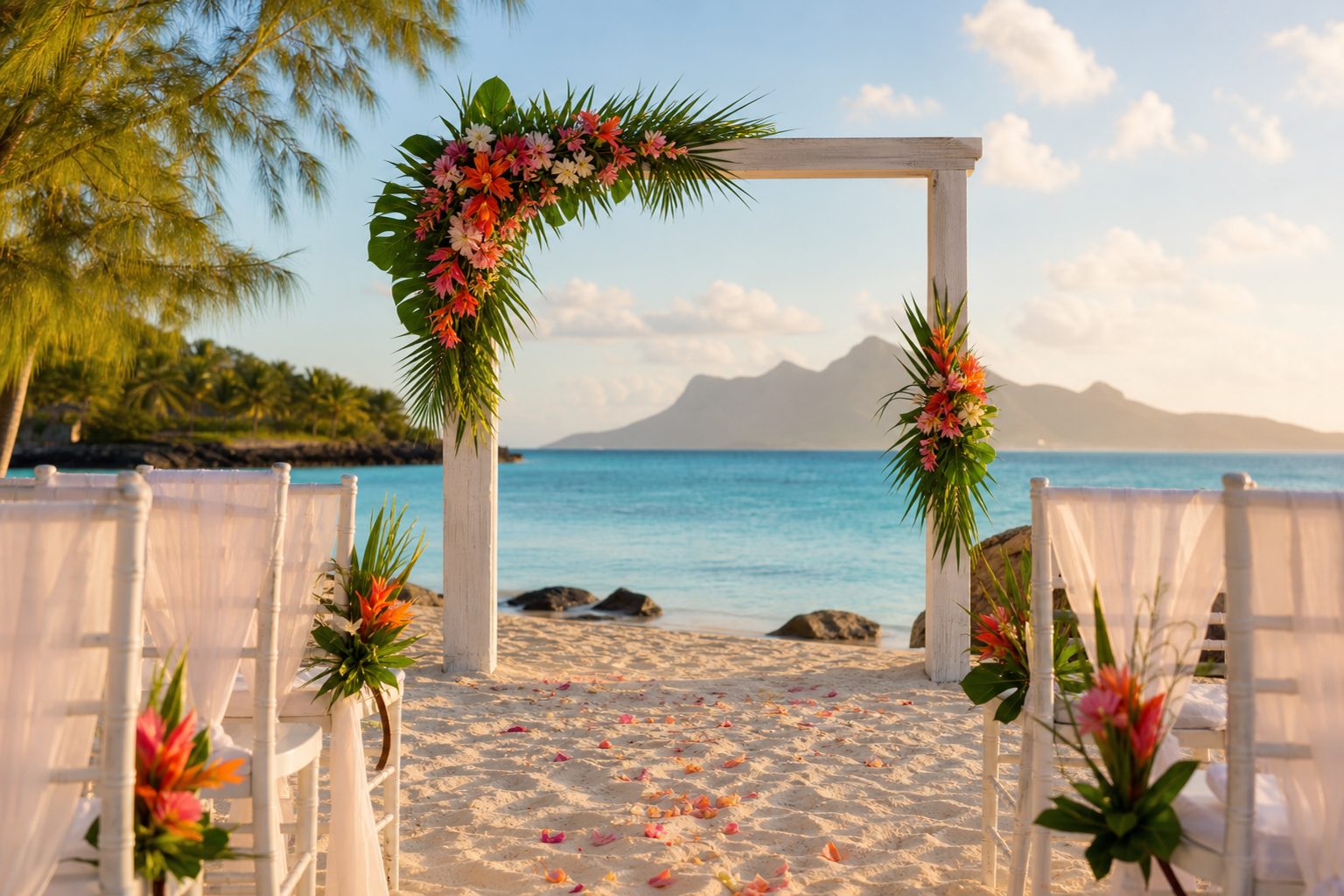
In any case, two things must be distinguished: the beauty of the ceremony and its legal validity. A flower arch, an eloquent celebrant and overwhelming vows are not enough to create a recognised marriage. Conversely, a very sober civil signature can precede a magnificent celebration. The right balance depends on your temperament.
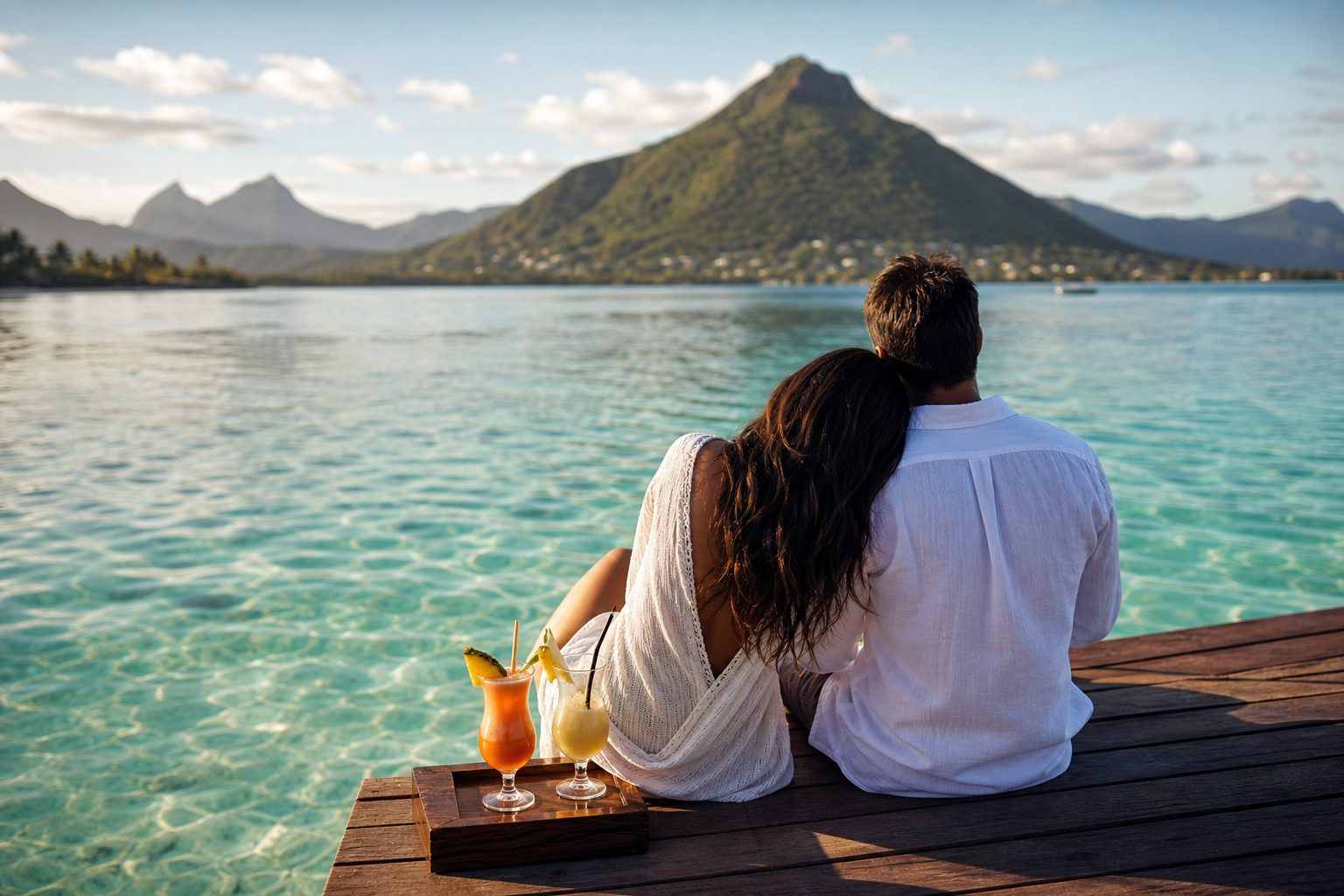
Checklist for preparing a wedding abroad from a distance
Success rests less on complexity than on order. A wedding far from home becomes much simpler when decisions are made in the right sequence.
- Define the format. Decide whether you are going as a couple, with your witnesses, with close family or with a larger group. The number of guests influences almost everything: venue, accommodation, meals, transfers, the rhythm of the stay.
- Choose the period. Check the local season, rainy periods, prevailing winds, public holidays and school holidays. A beautiful destination can be less suitable at certain times.
- Clarify the legal side. Determine whether you want a local civil wedding or a symbolic ceremony. Contact the competent authorities and ask for the precise list of required documents.
- Select a trusted venue. Favour a hotel, a house or an estate that replies quickly, explains clearly what is possible and knows the local constraints.
- Build a budget by category. Do not start with a vague envelope. List the main expenses and decide according to your priorities.
- Plan the accommodation. Check that the newlyweds, close family and essential providers can stay in good conditions, without multiplying complicated journeys.
- Think about transfers. A magnificent but hard-to-reach venue can tire your guests. Organise arrivals, departures and the journeys of the big day.
- Secure the key providers. Photographer, hair, make-up, celebrant, flowers, music, catering: some choices must be made early, especially if you have a precise style in mind.
- Build a weather plan. Even under a famously kind sky, a covered or sheltered alternative is essential.
- Inform your guests with tact. Give practical information without pressure: dates, recommended airport, dress code, climate, level of formality, options for extending the stay.
- Centralise the exchanges. Keep a file with contracts, confirmations, passports, civil status documents, inspirations, menus, timings and useful contacts.
- Allow free time. Do not turn the trip into a tight schedule. The most beautiful moments often arise between two official occasions.
Budget: the categories to anticipate without drowning in figures
A wedding-abroad budget is not just the price of the meal. You need to think in categories, then decide what falls to your couple and what remains the guests’ responsibility. Clarity prevents misunderstandings.
| Category | To plan for | Question to ask yourself |
|---|---|---|
| Travel | Flights, luggage, staggered arrivals, possible transfers | Do you want to help guests coordinate their journeys? |
| Accommodation | Rooms for the newlyweds, close family, sometimes providers | Do you want to gather everyone in the same place? |
| Ceremony | Venue, celebrant, decoration, sound, seating, possible documents | Should the ceremony be official or symbolic? |
| Reception | Cocktail, meal, drinks, dessert, service, furniture | Do you prefer a long dinner, a standing dinner-cocktail or a more intimate table? |
| Images | Photographer, video, couple session, possible session before or after | Which memories do you absolutely want to keep? |
| Beauty and outfits | Hair, make-up, touch-ups, transporting the clothes | Is the chosen outfit suited to the climate and the venue? |
| Atmosphere | Music, lighting, flowers, stationery, rituals | Which details truly carry your personality? |
| Coordination | Local organisation, presence on the day, provider management | Who will make the decisions if you are busy with your guests? |
| Contingencies | Weather, last-minute adjustments, fallback options | Have you kept a comfortable margin? |
The trap is comparing only the apparent cost of a wedding abroad with that of a large reception at home. It is better to compare the complete experience: number of guests, length of stay, level of intimacy, quality of the venue, time spent with loved ones, memories created. A smaller wedding is not a lesser wedding. It can be more generous, because it is better concentrated.
Who should you organise with on site?
A wedding organised from a distance requires a reliable local relay. This relay can be a hotel, an independent wedding planner, a specialised agency, or a combination of several contacts. The right choice depends on how much support you need.
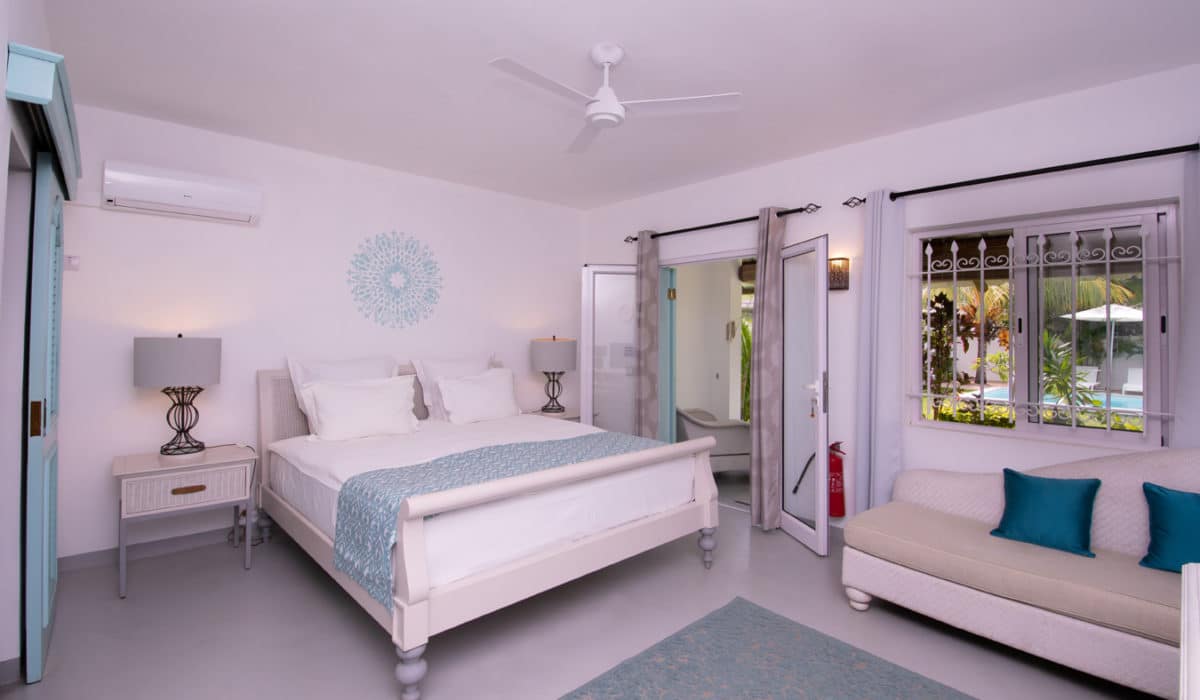
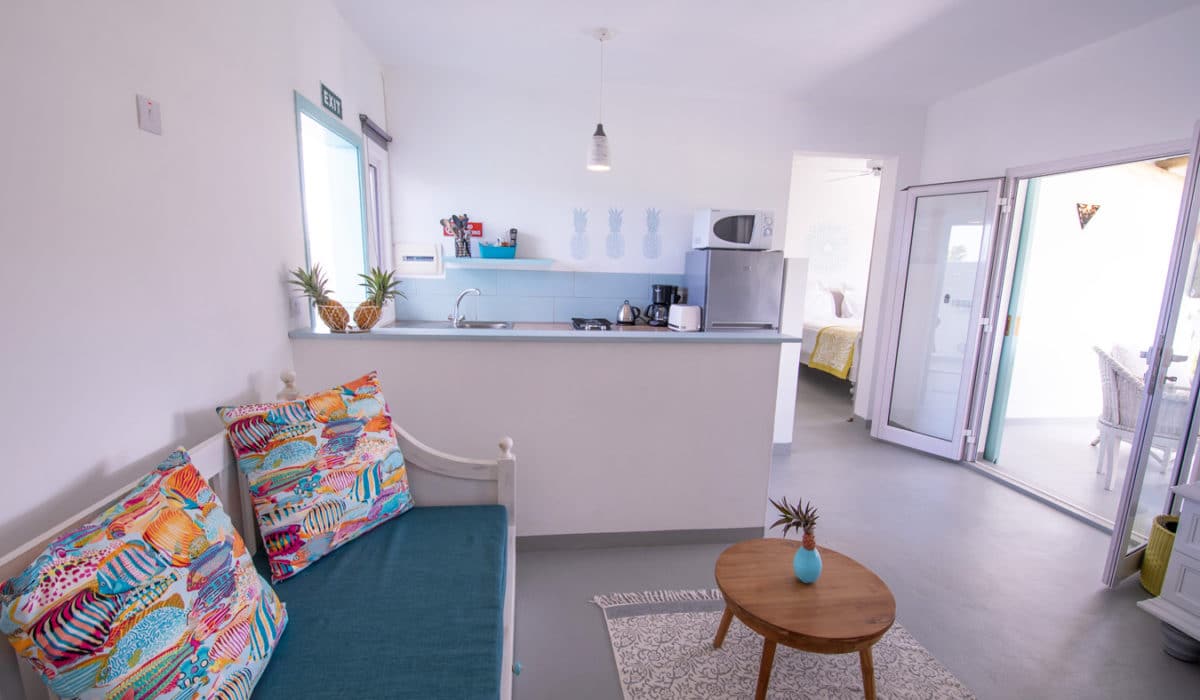
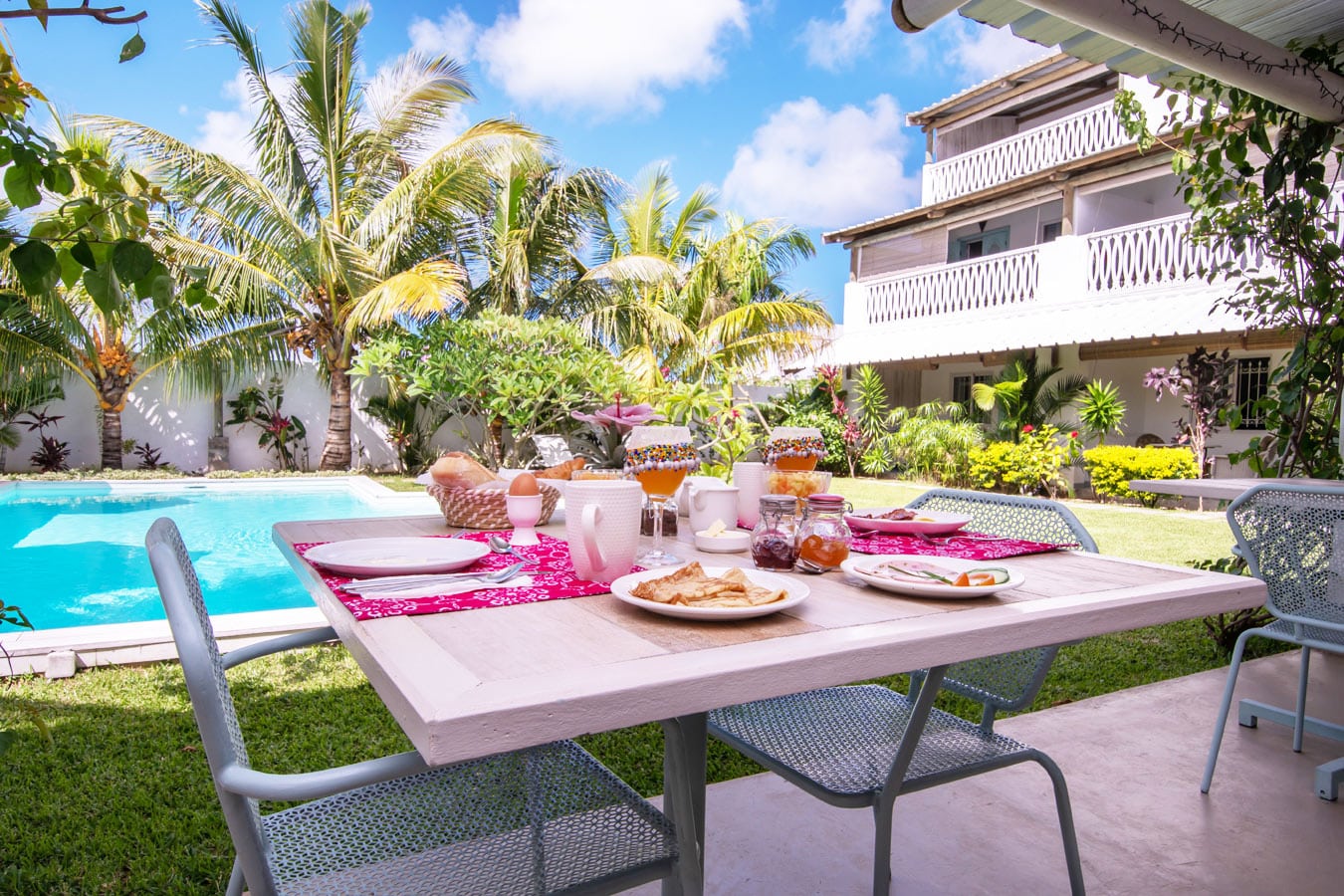
A charming hotel suits couples looking for a living, inhabited place, with a team on site, rooms, reception spaces and practical knowledge of the area. The advantage is coherence: accommodation, meals, welcome and coordination can talk to each other easily. For an intimate event, this solution often brings a great deal of fluidity.
An independent wedding planner is useful if the project involves several venues, many providers, complex staging or a large group. They can research, negotiate, follow the details and coordinate the big day. Choose someone who genuinely knows the destination, communicates clearly and respects your style.
Direct providers, such as the photographer, the florist or the celebrant, must be selected with care. Ask to see complete portfolios, not just a few perfect images. Check the way they work, response times, conditions in case of bad weather, timings, possible additional fees and their understanding of your language.
The most reassuring thing is to work with a person or a team capable of saying no when necessary. A good local contact does not promise everything. They explain what is realistic, suggest alternatives and protect your day from overly fragile decisions.
Why Mauritius stands out naturally for international couples
Mauritius brings together several qualities rarely found in one place. Language first: being able to explain your wishes, refine a nuance, discuss a menu, a timing or an emotion without searching for your words changes a great deal. English is used in many administrative and professional settings, which reduces misunderstandings and makes the preparation more human.
The size of the island is also an asset. You can organise a complete stay without spending your days in transfers. Distances still need to be considered, especially at busy traffic times, but the territory lets you combine beach, garden, boat trips, culinary discoveries and moments of rest with a certain simplicity.
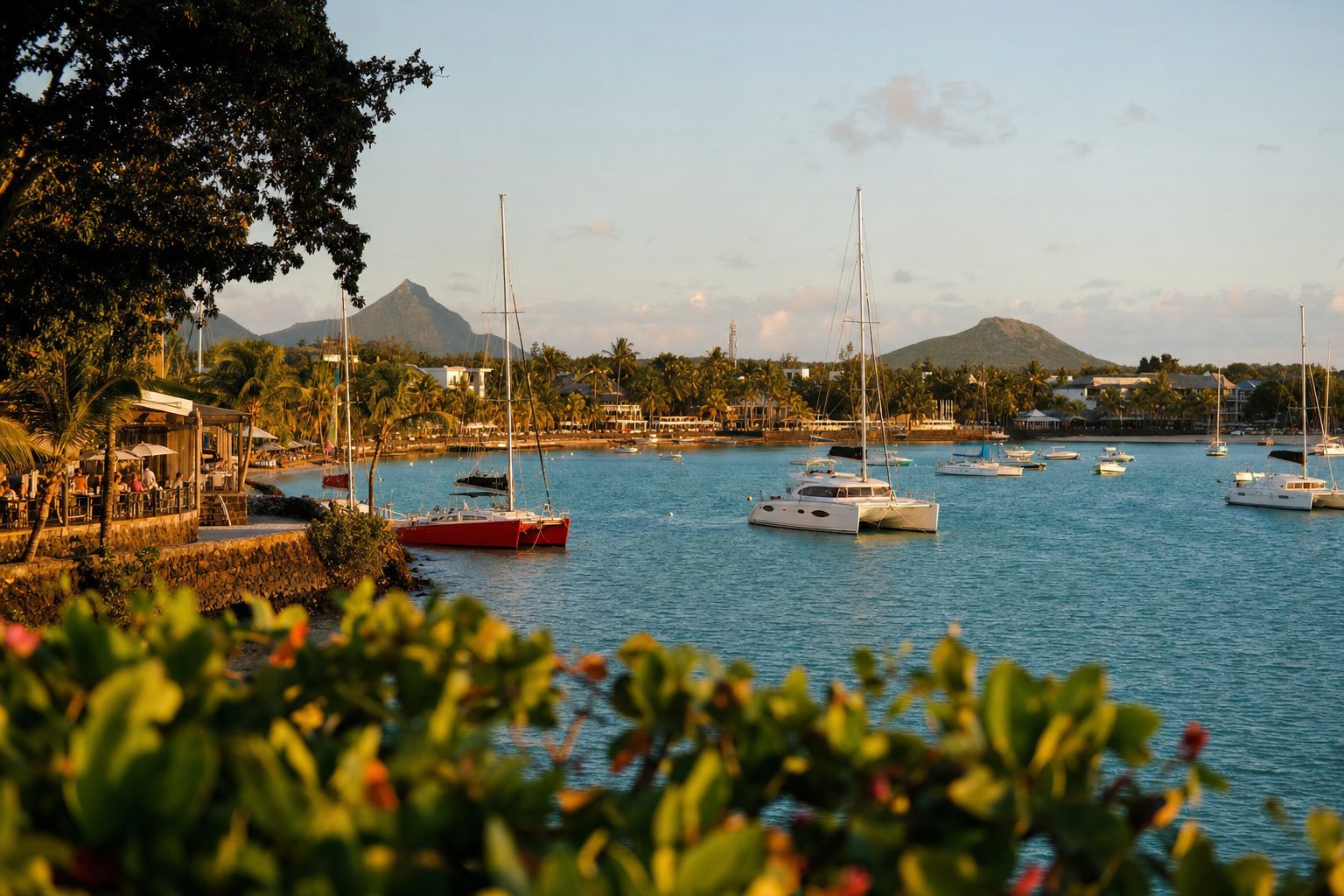
The climate offers welcome flexibility, provided you choose your period and location intelligently. The north and west are often sought after for their gentle way of life, their sunsets and their seaside atmosphere. Grand Baie, in particular, lets you enjoy true coastal village life, with restaurants, boat trips, nearby beaches and access to many services.
The formalities for a wedding in Mauritius must be prepared seriously, as in any foreign destination, but they are legible enough for many couples to approach them with confidence. The essential thing is to ask for up-to-date information, gather the documents in the right formats and rely on a contact used to this type of procedure.
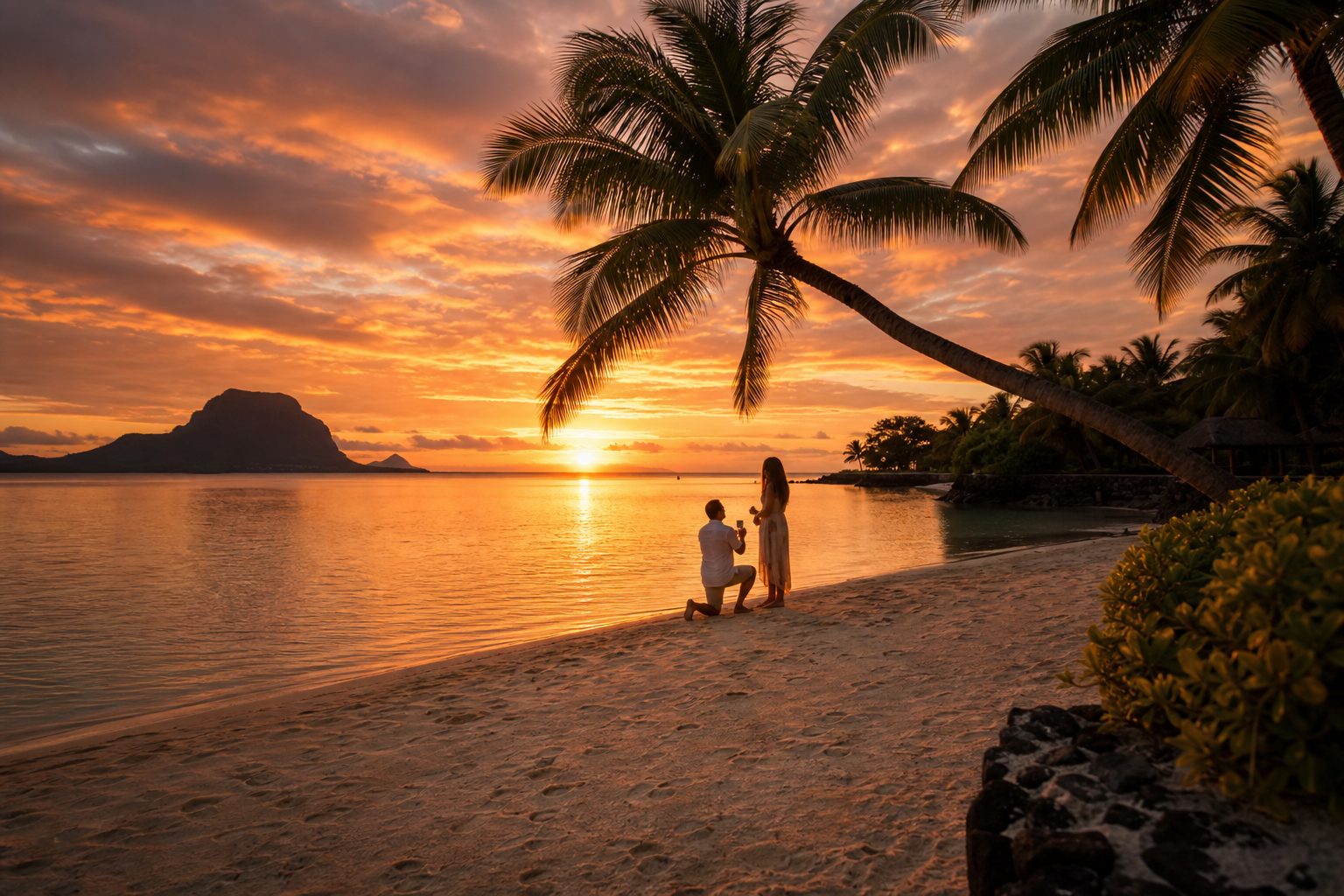
Finally, Mauritius has that rare capacity to welcome several life moments within a single trip: a marriage proposal, a ceremony, a family dinner, a photo session, a romantic stay. The island does not impose a single setting. It leaves room for your rhythm.
Frequently asked questions about getting married abroad
Is a marriage celebrated abroad automatically recognised in your home country?
No, not automatically. A civil marriage celebrated abroad must comply with local law and the conditions applicable to the spouses. Depending on your nationality, a registration with your home country’s civil authorities is generally necessary for the marriage to be fully recognised there. The exact steps depend on the country, the nationality of the spouses and their personal situation.
Is it simpler to have the civil wedding at home before leaving?
Often, yes. A civil wedding at home followed by a symbolic ceremony abroad avoids a large part of the administrative stress. You keep the freedom to organise a very personal celebration, without depending on a local procedure on your wedding day. It is a particularly comfortable solution for couples who want to prioritise emotion and travel.
How long does it take to prepare a wedding abroad?
It is best to plan well ahead, especially if you want a sought-after period, a specific venue or providers in high demand. The time needed depends on the destination, the number of guests and the type of ceremony. The bigger the legal component, the more margin you need for documents, validations and possible translations.
Should you pay for your guests’ travel?
There is no single rule. Some couples cover part of the accommodation or meals, others let guests organise their own trip. The important thing is to be clear from the start, without awkwardness or ambiguity. A wedding abroad requires an effort from your loved ones; giving them simple information early enough is already a true mark of consideration.
Can you organise a wedding abroad without a wedding planner?
Yes, if the format is intimate and the chosen venue has a reliable team on site. For a more complex project, a planner can bring real peace of mind. In any case, you need at least a local coordinator capable of managing the timings, the providers, the weather, the unexpected and the details you will not be able to follow yourselves on the big day.
Mistakes to avoid before booking
The first mistake is choosing the destination on a photo alone. A magnificent beach can be exposed to the wind, hard to reach, public, noisy or ill-suited to a ceremony. Always check the real conditions: timings, tides if they play a role, privacy, fallback options, permissions, guest comfort.
The second mistake is postponing the legal question. Many couples start with the decoration, then discover late that the required documents are more numerous than expected. Even if you choose a symbolic ceremony, clarify this point from the start. You will gain peace of mind.
The third mistake is overloading the programme. Your guests have travelled, sometimes far. They need breaks, time to settle in, free moments. A successful wedding abroad breathes. It does not try to fill every hour.
The fourth mistake is trying to control everything from your computer. Preparing from a distance requires trust. Choose your contacts well, ask the right questions, validate the essential elements, then let the local professionals manage what they know better than you.
Finally, do not neglect your own comfort. A dress suited to the climate, shoes compatible with the ground, a hairstyle that holds in humidity, make-up designed for the heat, timings that respect the light: these very concrete details change how the day is lived.
What does a successful wedding abroad look like?
It does not necessarily look like a big production. It looks like you. The guests understand where to go, what to wear and when to gather. The newlyweds do not spend the day answering the phone. The venue is beautiful, but also practical. The ceremony has meaning. The meal is appetising. The light is taken into account. Travel times remain reasonable. And above all, everyone feels they are there for a reason.
A successful wedding abroad is often simpler than you imagine: a few right choices, an attentive team, a setting that carries the emotion and an organisation solid enough for you to be able to forget it when the day comes. That is the kind of simplicity that becomes luxurious.
If you dream of a wedding on the shores of the Indian Ocean, an intimate proposal, a small-group celebration or a stay that gathers your loved ones without agitation, start by setting down your intention, your ideal season and your format. The team at Le Mandala Moris, in Grand Baie, can help you imagine a warm, realistic and deeply personal celebration in Mauritius.
Want to experience it for real?
Our team organises your event on site, in Grand Baie.