
In Mauritius, the local currency is the Mauritian rupee, often shown with the symbol Rs or the code MUR. Preparing your currency well before and during your trip helps avoid unpleasant surprises: unexpected bank fees, unfavorable exchange rates, refused payments in small shops, or approximate conversion into euros.
Here is a clear guide to understanding the currency of Mauritius, knowing where to exchange your euros, when to pay by card, when to keep cash, and how to manage your budget on site with peace of mind.
The Mauritian rupee: banknotes, coins, and useful reference points
The Mauritian rupee is used everywhere on the island: hotels, restaurants, markets, taxis, petrol stations, shops, excursions, and everyday services. Even though some tourism professionals may accept euros, the local currency remains the simplest and fairest way to pay for your everyday expenses.
Banknotes in circulation come in several denominations, including 25, 50, 100, 200, 500, 1000 and 2000 rupees. They feature portraits of Mauritian figures and elements linked to the country’s history or heritage.
You will also find coins in rupees and cents, sometimes locally called sous. Small coins are mainly used for modest purchases, although many everyday payments are made with rupee notes or coins.

A simple tip: keep large notes for more established places, such as hotels, restaurants, or established shops, and keep smaller denominations for taxis, markets, snack bars, car parks, tips, or small purchases.
Mauritius currency in euros: understanding the exchange rate
The rate between the euro and the Mauritian rupee varies depending on the markets, banks, exchange offices, and fees applied. It is therefore best to avoid outdated or approximate reference points. Before your departure, and then once you are there, check an up-to-date converter or the information published by your bank to get a reliable general idea.
When comparing two exchange rates, do not look only at the displayed figure. Also check:
- any fixed fees;
- the commission included or added;
- the rate actually applied at the time of the transaction;
- the difference between the buying rate and the selling rate;
- your bank’s fees if you use a foreign card.
To convert your expenses mentally, use a recent approximate rate, but always confirm significant amounts with an up-to-date converter. This is especially useful for accommodation, water activities, car rentals, private excursions, or meals in more upscale restaurants.
Where to exchange euros in Mauritius?
You can exchange your euros into Mauritian rupees in several places: exchange offices, banks, the airport, hotels, or tourist establishments. Each option has its advantages, but they are not all equal in terms of rates and convenience.
| Option | When to use it | Strengths | What to check |
|---|---|---|---|
| Exchange office in town | To exchange a reasonable amount after your arrival | Often convenient in tourist and shopping areas | Displayed rate, commission, official receipt |
| Bank | For a regulated and secure transaction | Reliable setting, clear procedures | More limited opening hours, possible waiting time, variable rate |
| Airport | To have rupees as soon as you arrive | Very convenient for taxis, initial expenses, small purchases | Rate sometimes less attractive than in town |
| Hotel | For a quick backup solution | Comfort and proximity | Rates and fees often less favorable |
A good strategy is to exchange a small amount on arrival, then calmly compare the exchange offices or banks near your place of stay. In Grand Baie, as in other tourist areas of the island, you will generally find accessible currency exchange options, but it remains important to check the rate and ask for a receipt.
Exchanging at the airport or in town: which option should you choose?
Exchanging at the airport is reassuring if you arrive late, if you need to pay for a taxi, or if you want to avoid looking for an ATM in the first few hours. However, for a larger amount, it may be wiser to wait until you are settled in and compare rates in town.
In practice, you can:
- keep a few euros easily accessible in your cabin luggage;
- exchange only what you need at the airport;
- withdraw or exchange more once you know your neighborhood;
- avoid carrying too much cash;
- split your payment methods between card and cash.
Paying by card in Mauritius
Bank cards are widely accepted in hotels, restaurants, supermarkets, established shops, car rental agencies, and petrol stations. They are convenient for larger expenses: accommodation, dinner, activities, rentals, and in-store purchases.
Before leaving, check with your bank:
- fees for payments outside the eurozone;
- fees for withdrawals abroad;
- payment and withdrawal limits;
- the procedure in the event of loss, theft, or card blocking;
- the possibility of receiving a security code if you do not have access to your usual phone line.
On site, if the terminal offers you the option to pay in euros or rupees, it is generally better to choose the local currency, then let your bank apply the conversion. Paying in euros may include a less favorable conversion rate, even if it seems easier to understand at first glance.
When should you prioritize cash?
Cash remains very useful in Mauritius. It makes small payments easier and avoids situations where cards are not accepted, where the terminal is not working, or when the merchant prefers direct payment.
Keep rupees for:
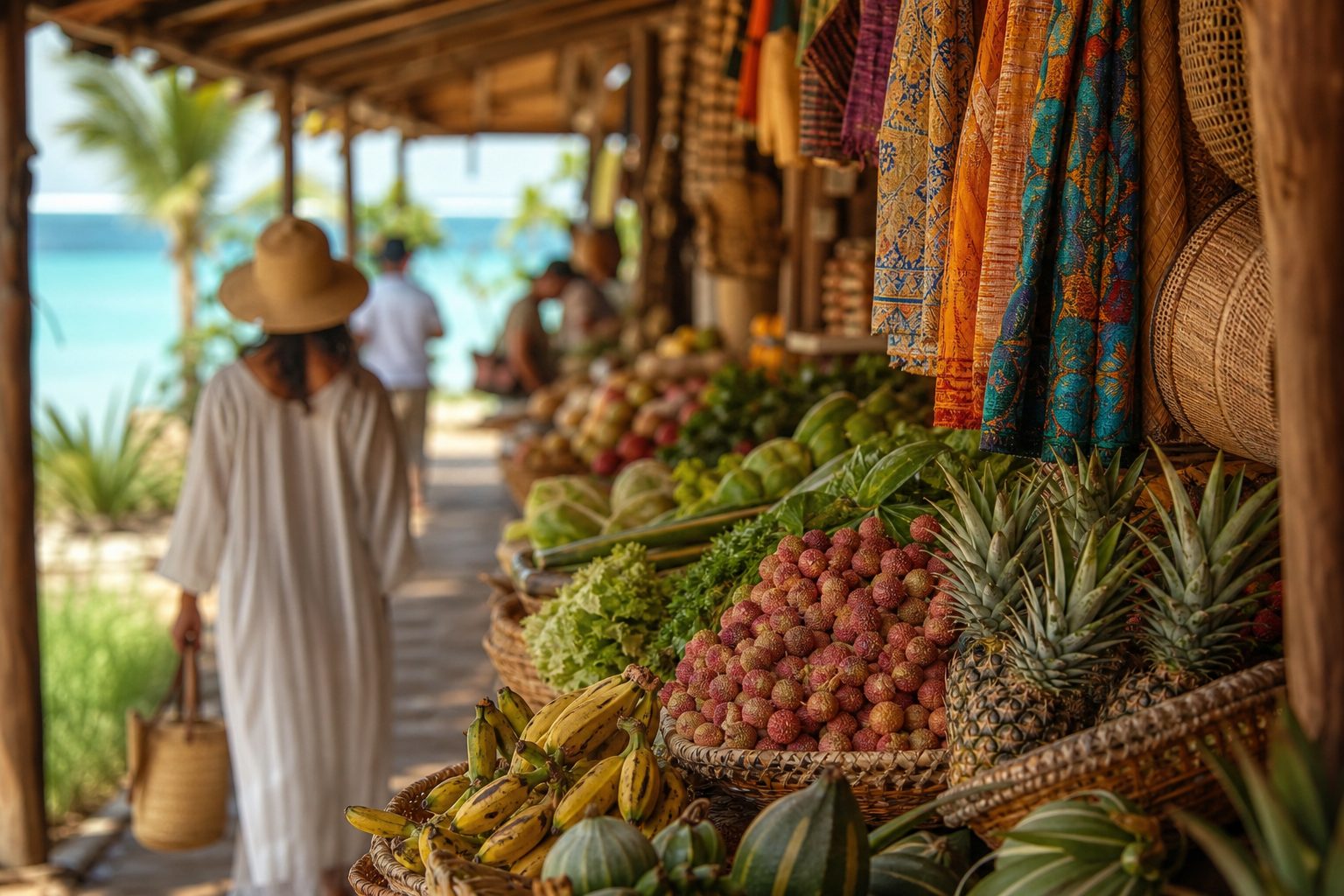
- markets and craft purchases;
- some taxis or transfers;
- small restaurants, snack bars, and local stalls;
- tips;
- car parks, small errands, or spontaneous purchases;
- some activities booked directly on site.
Euros may sometimes be accepted by taxis, shops, or tourism providers, but the rate used is often approximate. To avoid an unfavorable conversion, it is better to pay in rupees whenever possible.
ATM withdrawals: fees and best practices
ATMs can be found in towns, shopping centers, tourist areas, and near banks. Withdrawing rupees directly can be convenient, provided you know your card fees.
To limit inconvenience:
- preferably use an ATM located in a bank, shopping center, or busy place;
- avoid withdrawals in isolated places, at night, or in poorly lit areas;
- check the displayed fees before confirming the transaction;
- withdraw amounts suited to your needs, without accumulating too much cash;
- keep the receipt until you have checked your bank statement;
- inform your bank of your trip if it recommends doing so.
Fees may come from two sides: the local bank or the ATM network, then your own bank. This is why it is useful to compare the cost of a withdrawal with that of a card payment, depending on your contract.
Tipping in Mauritius: what are the customs?
Tipping is not a strict obligation, but it is appreciated when you feel the service has been attentive: driver, porter, guide, housekeeping staff, waiter, boat crew, or excursion provider.
There is no single rule. The fairest approach is to adapt your gesture to the quality of the service, the duration of the service provided, and the context. Plan to have small rupee notes: they are more practical and better suited to everyday situations.
What budget should you plan according to your travel style?
The budget in Mauritius depends greatly on your accommodation, transport, dining habits, and chosen activities. Without giving precise amounts, which vary depending on the season and personal preferences, several profiles can be identified.
- Simple and local travel: meals in relaxed places, limited transport, public beaches, markets, walks, and a few carefully chosen activities.
- Comfortable travel: varied restaurants, organized transfers or rental car, regular excursions, pleasure purchases, a more flexible pace.
- Upscale stay: refined dining, private activities, sea trips, spa, chauffeur, tailor-made experiences, and personalized services.
- Honeymoon or celebration: a more flexible budget for memorable moments, such as a romantic dinner, a private excursion, special decoration, or a photo session.
The right approach is to plan for the main expenses to be paid by card, then keep a rupee budget for small expenses, markets, tips, and pleasant surprises.
Pitfalls to avoid with currency in Mauritius
A few simple habits help avoid most unpleasant surprises related to currency in Mauritius.
- Do not exchange all your money at once: keep some flexibility, especially if you also pay by card.
- Avoid informal money changers: choose banks, identifiable exchange offices, and recognized establishments.
- Always ask for the rate before confirming: especially if you are paying in euros in a shop or taxi.
- Do not rely on an old rate: check an up-to-date converter before making a major expense.
- Keep small denominations: large notes can be impractical for small purchases.
- Watch bank fees: several small international payments can cost more than expected depending on your bank.
- Choose rupees on terminals: if payment in euros is offered, compare before accepting.
Managing your money from the north of the island
If you are staying in the north, in Pointe aux Canonniers, between Grand Baie and Trou aux Biches, managing your money is very straightforward. Grand Baie, close by, is one of the tourist areas where you will generally find accessible currency exchange options and ATMs: a good opportunity to compare rates calmly once you are settled in, rather than exchanging everything at the airport.
Day to day, the approach described above works well in the north of the island: card payments for accommodation, established restaurants and shops, and rupees in small notes for markets, taxis, tips and spontaneous purchases. Remember to set aside part of your budget for the pleasures of your stay: a boat trip towards the northern islets, a catamaran cruise or a gourmet moment such as our signature brunch. Before a day at sea, keep some cash on you, in particular for a tip for the crew if you enjoyed the service.
Finally, if you are staying for several weeks, for example as part of a long stay in Mauritius, split your payment methods and keep an eye on cumulative bank fees: several small international payments can cost more than expected depending on your bank.
Before you leave: the money checklist
- Check card and withdrawal fees abroad.
- Note down your bank’s emergency number.
- Plan two payment methods if possible.
- Check an up-to-date euro-to-Mauritian-rupee converter.
- Bring some cash in euros for your arrival.
- Keep a pouch or separate storage option to split cards and cash.
- Ask your accommodation which payment options are accepted.
Managing the currency of Mauritius is not complicated: pay by card when it is convenient, keep rupees for everyday expenses, compare exchange bureaus and check your bank’s fees. With these habits, you can make the most of your stay with peace of mind, without wasting time on last-minute conversions.
Frequently asked questions
What is the official currency of Mauritius?
The official currency is the Mauritian rupee, indicated by Rs or MUR. It is used in shops, hotels, restaurants, taxis, markets and local services.
Can you pay in euros in Mauritius?
Some taxis, shops or tourism providers may sometimes accept euros, but the rate applied can be approximate. For everyday expenses, it is better to pay in Mauritian rupees.
Where can you find a currency exchange bureau in Mauritius?
You can find currency exchange bureaus in tourist areas, town centres, some shopping centres and near busy locations. Always compare the displayed rate, any fees, and ask for a receipt.
Is it better to pay by card or in cash?
Cards are convenient for hotels, restaurants, supermarkets, rentals and major expenses. Cash in rupees remains useful for markets, taxis, tips, small restaurants and everyday purchases.
How can you check the exchange rate between the euro and the Mauritian rupee?
The rate varies. Before exchanging or withdrawing money, check an up-to-date converter or your bank’s information. For large amounts, also check the fees and commissions applied.
Which rupee notes should you keep on hand for everyday expenses?
Keep large notes for hotels, restaurants and established shops, and keep smaller denominations for taxis, markets, snack bars, car parks and tips. Small notes are far more practical for everyday payments.
How can you limit ATM fees in Mauritius?
Preferably use an ATM located in a bank, a shopping centre or a busy place, check the displayed fees before confirming the transaction, withdraw amounts suited to your needs and keep the receipt until you have checked your bank statement.